Glass Slide Antibody Arrays
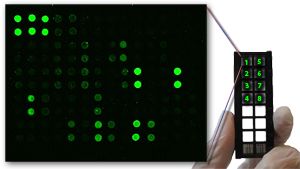
RayBio® Glass Slide-based Antibody Arrays (G-Series) were introduced as a “second generation” array platform after the chemiluminescent membrane arrays (C-Series). The G-Series uses a 75mm x 25mm glass chip platform which delivers easier handling along with the use of much lower sample volumes. The glass slides also utilize a fluorescent signal readout, allowing a wider dynamic detection range than can be achieved by chemiluminescence.
Glass Slide-based Antibody Arrays are particularly well-suited for projects with very limited sample volumes (as little as 10 μl per array) and large numbers of samples. Dozens of arrays can be processed per day by a single technician. Furthermore, the slide chamber assembly is compatible with many automated array processing systems, allowing high-throughput studies to be performed with very little hands-on time.
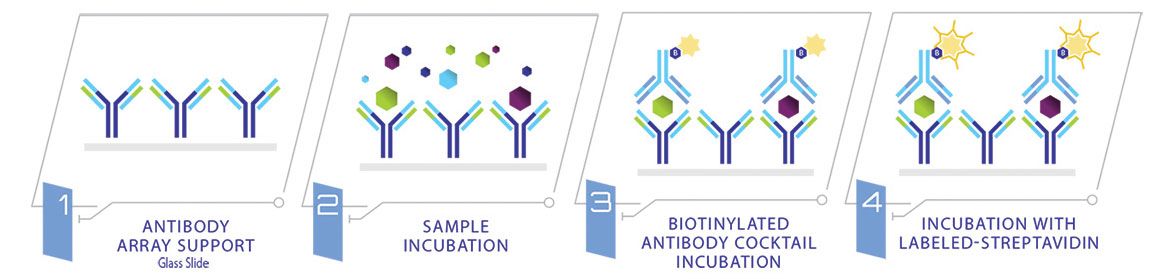
Similar to the membrane arrays (C-Series), G-Series arrays utilize the sandwich-ELISA design principle. In this assay, capture antibodies are printed in multiple identical arrays on a standard-sized histology slide. After a blocking step, samples are incubated with the arrays. Nonspecific proteins are then washed off, and the arrays are incubated with a cocktail of biotinylated detection antibodies, followed by a streptavidin-conjugated fluor. Signals are visualized using a fluorescence laser scanner.
Laser scanner specifications
If you do not have access to a scanner, RayBiotech now offers FREE slide scanning and data extraction service for all glass slide arrays.
How It Works
Glass slide antibody arrays use the sandwich-based detection method.
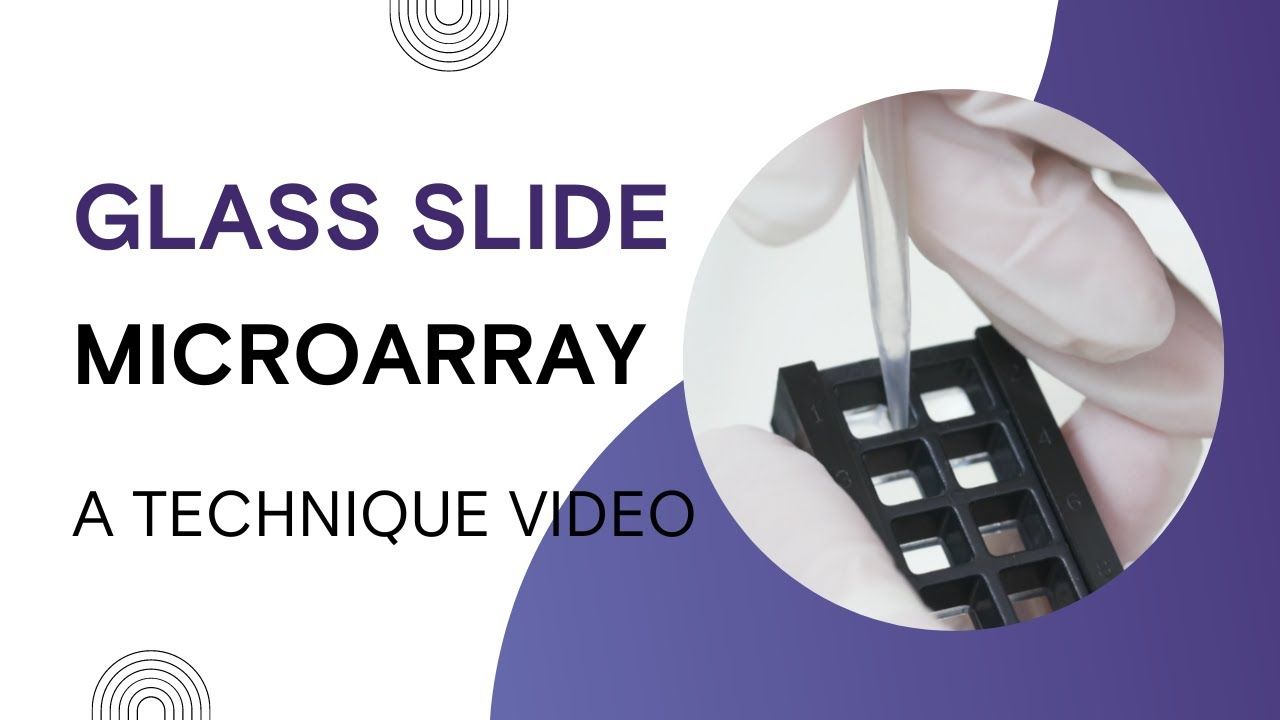
Glass Slide Microarray Technique Video
Watch the YouTube video above to learn best practices for handling RayBiotech glass slide antibody and protein arrays.