Introduction
BSDC1 is a 430 amino acid protein encoded by a gene mapping to chromosome 1. Chromosome 1 is the largest human chromosome spanning about 260 million base pairs and making up 8% of the human genome. There are about 3,000 genes on chromosome 1, and considering the great number of genes there are also a large number of diseases associated with chromosome 1. Notably, the rare aging disease Hutchinson-Gilford progeria is associated with the LMNA gene which encodes lamin A. When defective, the LMNA gene product can build up in the nucleus and cause characteristic nuclear blebs. The mechanism of rapidly enhanced aging is unclear and is a topic of continuing exploration. The MUTYH gene is located on chromosome 1 and is partially responsible for familial adenomatous polyposis. Stickler syndrome, Parkinsons, Gaucher disease and Usher syndrome are also associated with chromosome 1. A breakpoint has been identified in 1q which disrupts the DISC1 gene and is linked to schizophrenia. Aberrations in chromosome 1 are found in a variety of cancers including head and neck cancer, malignant melanoma and multiple myeloma.
Specificity
Predicted Reactivity
Mouse, Bovine
Other Names
BSDC1; BSD domain-containing protein 1
NCBI Accession #
NP_001137360.1;NP_001137361.1;NP_001137362.1;NP_060515.3
Other Accession #
Q80Y55; Q3SX22; NP_060515.3
Format
Type
Peptide Affinity Purified Rabbit Polyclonal Antibody (Pab)
Calculated Molecular Weight (Da)
47163
Recommended Dilutions
WB: 1:1000
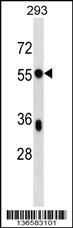 | BSDC1 Antibody (C-term) (Cat# 102-13161) western blot analysis in 293 cell line lysates (35ug/lane).This demonstrates the BSDC1 antibody detected the BSDC1 protein (arrow). |
Antigen Source
HUMAN
Storage/Stability
2-8°C (short-term); -20°C (long-term)
Expiration:
12 months from the date of shipment when stored properly.