Synonyms
GSD13 antibody, MSE antibody, ENO3 antibody, beta-enolase antibody, skeletal muscle enolase antibody, muscle-specific enolase antibody, 2-phospho-D-glycerate hydrolyase antibody, enolase 3 (beta, muscle) antibody
Specificity
Species Reactivity
Human, Rat, Mouse
Format
Product Type
Primary antibody
Formulation
0.1M Tris, 0.1M Glycine, 10% Glycerol (pH7). 0.01% Thimerosal was added as a preservative.
Calculated Molecular Weight
47 kDa
Immunogen
Recombinant fragment corresponding to a region within amino acids 196 and 434 of ENO3 (Uniprot ID# P13929)
Applications
Applications Tested
IHC (Formalin-fixed paraffin-embedded sections),Western blot
Application Notes
Suggested starting dilutions are as follows: WB: 1:1000-1:10000, IHC-P: 1:100-1:1000 [suggested antigen retrieval using heat mediated 10mM Citrate buffer (pH6.0) or Tris-EDTA buffer (pH8.0)]. Not yet tested in other applications. Optimal working dilutions should be determined experimentally by the end user.
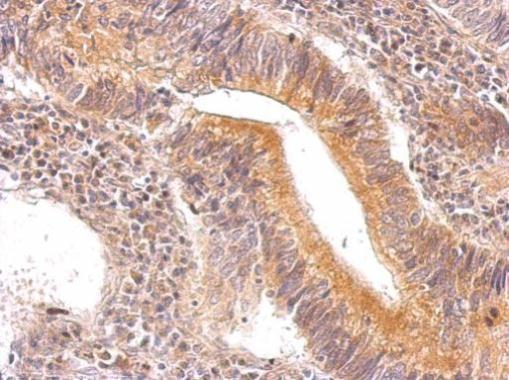
ENO3 antibody detects ENO3 protein at cytosol on gastric carcinoma by immunohistochemical analysis.
Sample: Paraffin-embedded gastric carcinoma.
ENO3 antibody (107-11062) dilution: 1:500.
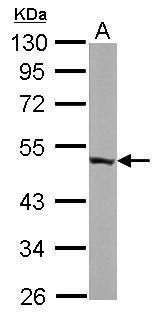
Sample (50 ug of whole cell lysate)
A: mouse brain
10% SDS PAGE
107-11062 diluted at 1:10000
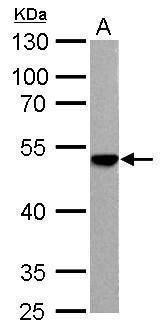
ENO3 antibody detects ENO3 protein by Western blot analysis.
A. 30 µg Rat2 whole cell lysate/extract
10 % SDS-PAGE
ENO3 antibody (107-11062) dilution: 1:1000
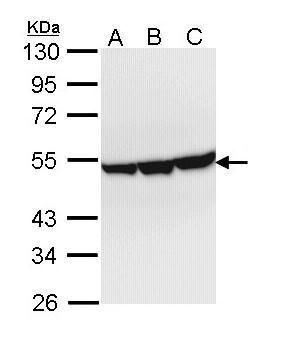
Sample (30 ug of whole cell lysate)
A: Hep G2
B: Molt-4
C: Raji
10% SDS PAGE
107-11062 diluted at 1:1000
Storage
Keep as concentrated solution. Aliquot and store at -20°C or below. Avoid multiple freeze-thaw cycles.
Expiration:
12 months from the date of shipment when stored properly.