Introduction
The ETS family of transcription factors, characterized by an evolutionarily conserved DNA-binding domain, regulates expression of more than 300 target genes by binding to a purine-rich GGAA/T core sequence. Depending on the cellular context, they can function as transactivators or transrepressors. Ets proteins have been implicated in regulation of gene expression during a variety of biological processes, including growth control, transformation, T-cell activation, and developmental programs in many organisms. Signals regulating cell growth are transmitted from outside the cell to the nucleus by growth factors and their receptors, G-proteins, kinases and transcription factors. It was shown that ETS signal transduction is implicated in hematopoiesis and angiogenesis at the earliest stages of embryogenesis, and is later involved in tissue development. Deregulated expression and/or formation of chimeric fusion proteins of the ETS family due to proviral insertion or chromosome translocation is associated with leukemias and with specific types of solid tumors.1 Among the multiple Ets proteins, the PEA3 group consists of ETV1 (Ets variant gene 1; also called ER81), ETV4 (also called PEA3) and ETV5 (also called ERM). All three members are 95% identical in the ETS domain and more than 85% in the acidic transactivation domain. Several studies suggest that the PEA3 group proteins are involved in intestinal tumors, gastric cancer, and breast cancer metastasis. In nearly all Ewing's sarcoma tumors, EWS, which encodes a RNA-binding protein, is fused by chromosomal translocation to an Ets gene, including FLI, ERG, ETV4, and ETV1. This results in the expression of chimeric proteins that may be important in tumor cell transformation.2 Recently, it was reported that TMPRSS2, an AR-regulated gene, is fused by translocation to the ETV1, ERG, or ETV4 gene in a subset of prostate cancers. These findings suggest an important role for PEA3 proteins in prostate cancer.3 In addition Ets family members have been correlated to tumor progression by upregulating the expression of matrix-degrading proteases. The acquisition of a migratory phenotype by the epithelial tumor cells together with the remodeling of the extracellular matrix must accompany the process of cancer cell invasion. Indeed, ETV5 has been shown to act through matrix metalloproteinase-2 gelatinolytic activity to confer invasive capabilities, associated with an initial switch to myometrial infiltration.4
Specificity
Other Names
ETV5; ERM; ETS translocation variant 5; Ets-related protein ERM
NCBI Accession #
NP_004445.1
Other Accession #
NP_004445.1
Format
Type
Peptide Affinity Purified Rabbit Polyclonal Antibody (Pab)
Calculated Molecular Weight (Da)
57838
Recommended Dilutions
WB: 1:1000; FC: 1:10-50
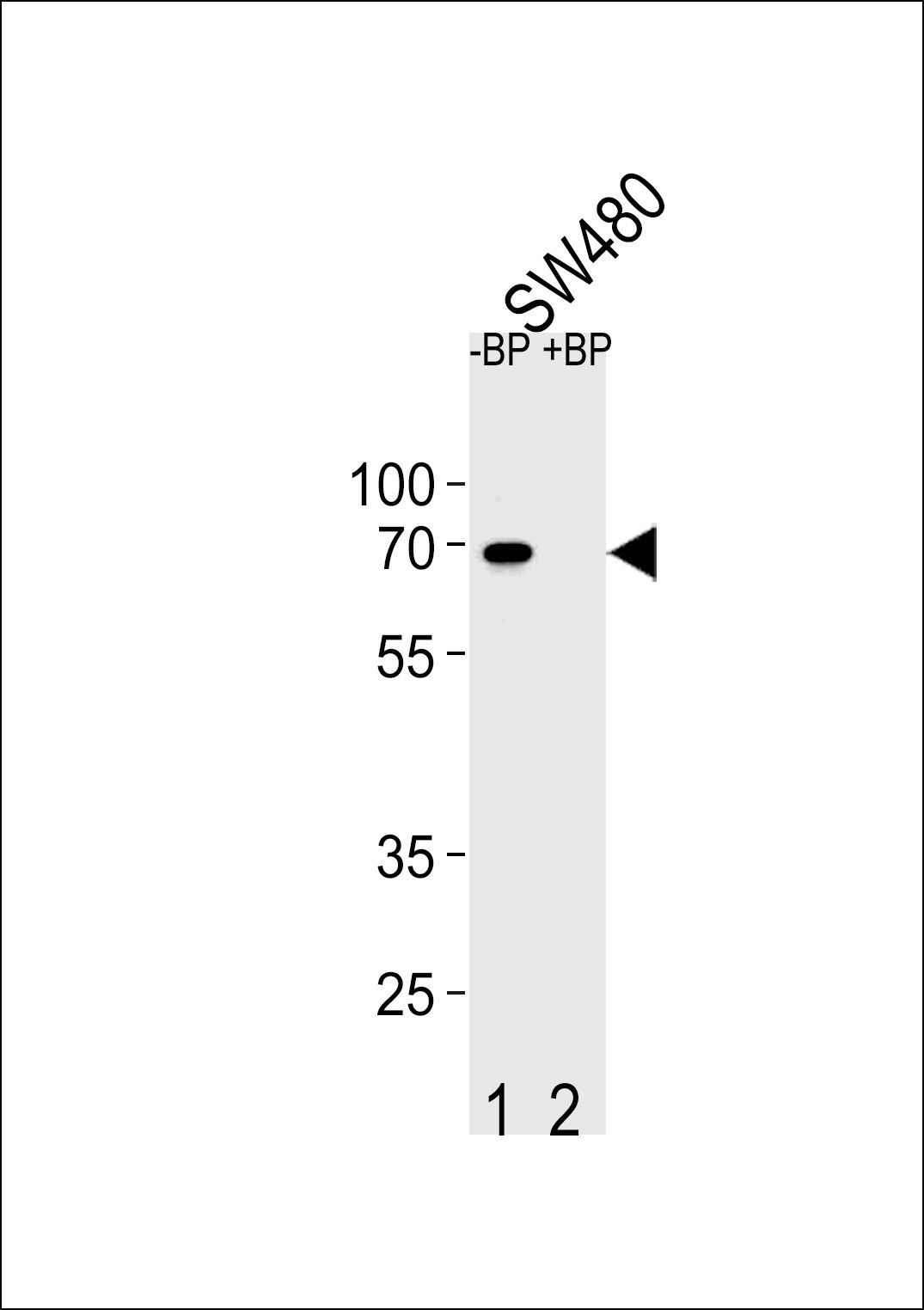 | Western blot analysis of ETV5 Antibody (N-term) Pab (Cat# 102-10777) pre-incubated without(lane 1) and with(lane 2) blocking peptide in SW480 cell line lysate. ETV5 Antibody (N-term) (arrow) was detected using the purified Pab. |
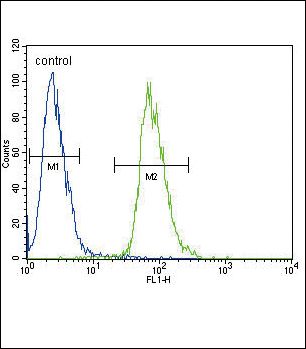 | ETV5 Antibody (N-term) (Cat# 102-10777) flow cytometric analysis of 293 cells (right histogram) compared to a negative control cell (left histogram).FITC-conjugated goat-anti-rabbit secondary antibodies were used for the analysis. |
Antigen Source
HUMAN
Storage/Stability
2-8°C (short-term); -20°C (long-term)
Expiration:
12 months from the date of shipment when stored properly.