3607 Parkway Ln Ste 200 Norcross, Georgia 30092
www.RayBiotech.com | info@raybiotech.com
770-729-2992 | +1-888-494-8555
ISO 13485:2016 cGMP

3607 Parkway Ln Ste 200 Norcross, Georgia 30092
www.RayBiotech.com | info@raybiotech.com
770-729-2992 | +1-888-494-8555
ISO 13485:2016 cGMP
Catalog #: 102-17497
Rabbit Anti-FGFR2 (N-term) Antibody, 400 ul
| Size | 400 µL |
| Estimated Lead Time | 1-2 weeks |
| Species | Human, Mouse, Rat, Non-Human Primate (rhesus monkey) |
| Host Species | Rabbit |
| Accession Number | P21802 |
| Gene Id | 2263 |
| Gene Symbols | FGFR2 |
| Protein Name / Synonyms | FGFR2 (N-term) |
| Clonality | Polyclonal |
| Preparation | This FGFR2 antibody is generated from rabbits immunized with a KLH conjugated synthetic peptide between 7-37 amino acids from the N-terminal region of human FGFR2. |
| Concentration (lot specific) | 0.5 mg/ml |
| Recommended Applications | Western Blotting, IF, FC |
| Research Area | Angiogenesis |
| Shipping Type | Blue ice |
| Storage | -20°C |
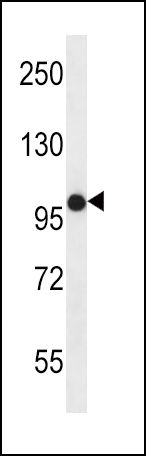 | FGFR2 Antibody (N-term) (Cat# 102-17497) western blot analysis in Hela cell line lysates (35ug/lane).This demonstrates the FGFR2 antibody detected the FGFR2 protein (arrow). |
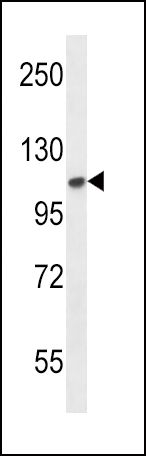 | FGFR2 Antibody (N-term) (Cat# 102-17497) western blot analysis in mouse NIH-3T3 cell line lysates (35ug/lane).This demonstrates the FGFR2 antibody detected the FGFR2 protein (arrow). |
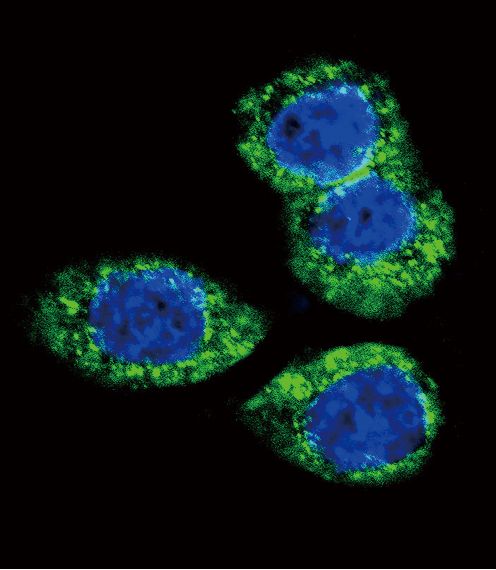 | Confocal immunofluorescent analysis of FGFR2 Antibody (N-term)(Cat# 102-17497) with Hela cell followed by Alexa Fluor 488-conjugated goat anti-rabbit lgG (green).DAPI was used to stain the cell nuclear (blue). |
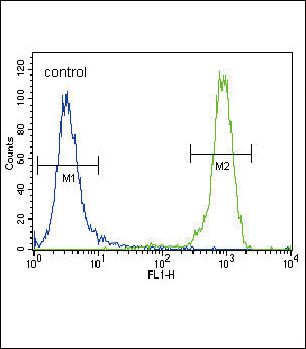 | FGFR2 Antibody (N-term) (Cat# 102-17497) flow cytometric analysis of NCI-H460 cells (right histogram) compared to a negative control cell (left histogram).FITC-conjugated goat-anti-rabbit secondary antibodies were used for the analysis. |
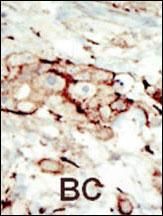 | Formalin-fixed and paraffin-embedded human cancer tissue reacted with the primary antibody, which was peroxidase-conjugated to the secondary antibody, followed by AEC staining. This data demonstrates the use of this antibody for immunohistochemistry; clinical relevance has not been evaluated. BC = breast carcinoma; HC = hepatocarcinoma. |
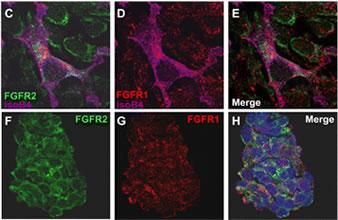 | C:FGFR2/isolectinB4 (C) and FGFR1/isolectinB4 (D) staining of apparent mesenchymal cells and the subpopulation of endothelial cells. Virtually all other dispersed apparent mesenchymal cells express FGFR1 and FGFR2 (merged image in E). F: FGFR2 (F) and FGFR1 (G) staining in clustered cells of epithelial origin (inferred by morphology here) demonstrating that epithelial cells express both FGFR1 and FGFR2 (merged image with DAPI staining in H). |
Your cart is empty.