Introduction
FNTA, also known as CAAX farnesyltransferase (FTase), attaches a farnesyl group from farnesyl pyrophosphate to cysteine residues at the fourth position from the C terminus of proteins that end in the so-called CAAX box, where C is cysteine, A is usually but not always an aliphatic amino acid, and X is typically methionine or serine. This type of posttranslational modification provides a mechanism for membrane localization of proteins that lack a transmembrane domain. This enzyme has the remarkable property of farnesylating peptides as short as four residues in length that conform to the CAAX consensus sequence. FNTA is also a specific cytoplasmic interactor of the transforming growth factor-beta and activin type I receptors. It is likely to be a key component of the signaling pathway which involves p21ras, an important substrate for farnesyltransferase.
Specificity
Predicted Reactivity
Rat, Bovine
Other Names
FNTA; Protein farnesyltransferase/geranylgeranyltransferase type-1 subunit alpha; CAAX farnesyltransferase subunit alpha; FTase-alpha; Ras proteins prenyltransferase subunit alpha; Type I protein geranyl-geranyltransferase subunit alpha
NCBI Accession #
NP_002018.1
Other Accession #
Q04631; Q61239; P29702
Format
Type
Purified Rabbit Polyclonal Antibody (Pab)
Calculated Molecular Weight (Da)
44409
Recommended Dilutions
WB: 1:1000
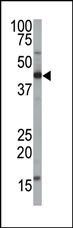 | The anti-FNTA Pab (Cat# 102-15035) is used in Western blot to detect FNTA in mouse brain tissue lysate. |
Antigen Source
HUMAN
Storage/Stability
2-8°C (short-term); -20°C (long-term)
Expiration:
12 months from the date of shipment when stored properly.