RayBiotech

3607 Parkway Ln Ste 200 Norcross, Georgia 30092

www.RayBiotech.com | info@raybiotech.com

770-729-2992 | +1-888-494-8555

ISO 13485:2016 cGMP

Anti-GIP Antibody, Biotinylated

Catalog #: 130-10094B-50

Rabbit anti-GIP Biotinylated Antibody, 50 ug

Product Description

Specifications

Size50 µg
Estimated Lead Time1-2 business days
SpeciesHuman
Host SpeciesRabbit
Accession Number
P09681
Gene Id
2695
Gene Symbols
GIP
ClonalityPolyclonal
Immunogen
Immunogen was synthetic peptide derived from human GIP. This antibody was produced from a rabbit immunized with the immunogen. The IgG fraction was purified from rabbit serum followed by Protein A/G affinity chromatography.
Immunogen Sequence
CYAEGTFISDYSIAMDKIHQQD
IsotypeIgG
Recommended ApplicationsELISA (recommended work dilution= 1: 16, 000)
Reconstitution
A separate vial of dilution buffer is provided for reconstitution. The antibody is supplied lyophilized, originally containing PBS, without preservative stabilizers (e.g. sodium azide). The final amount is indicated on the shipping vial.
Shipping TypeAmbient temperature
Storage-20°C

Description

Description

Gastric inhibitory polypeptide (GIP), also known as the glucose-dependent insulinotropic peptide is a member of the secretin family of hormones. This gene encodes an incretin hormone and belongs to the glucagon superfamily. The encoded protein is important in maintaining glucose homeostasis as it is a potent stimulator of insulin secretion from pancreatic beta-cells following food ingestion and nutrient absorption. This gene stimulates insulin secretion via its G protein-coupled receptor activation of adenylyl cyclase and other signal transduction pathways. GIP is also thought to have significant effects on fatty acid metabolism through stimulation of lipoprotein lipase activity in adipocytes.

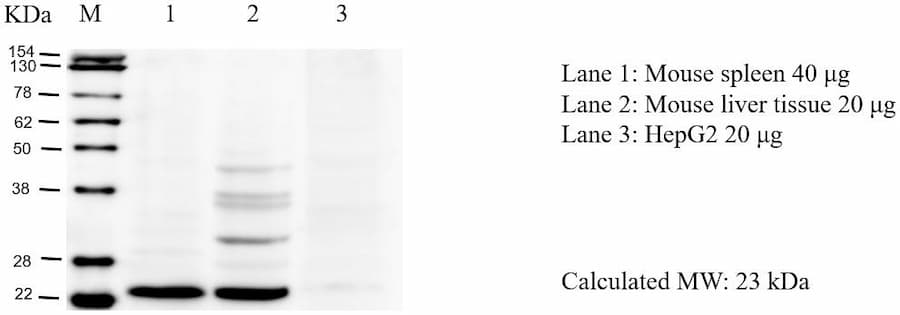
Western Blot Analysis

Ab: Rabbit Anti-GIP (Cat#: 130-10094) 1:1000
Ab: HRP Goat anti-rabbit IgG (H+L) 1:5000

Immunohistochemistry (IHC) Analysis

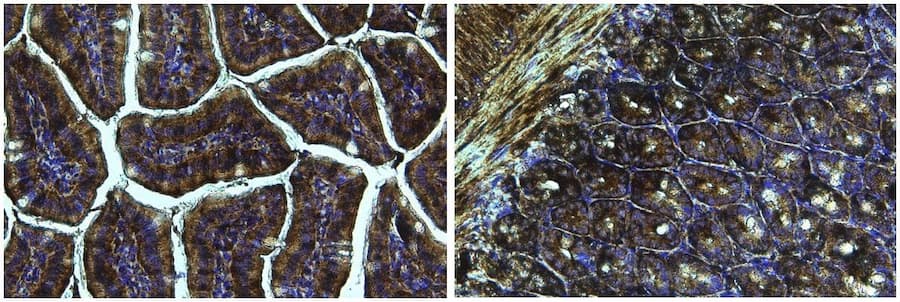
IHC shows positive staining in mouse colon tissue. Antibody Rabbit Anti-Human GIP was used at a dilution of 1/200 followed by mouse and rabbit IgG (ready to use) polymerization using HRP polymer, counterstained with hematoxylin. Heat-mediated antigen retrieval was performed using Tris/EDTA buffer pH9.0 before starting IHC staining (40X).


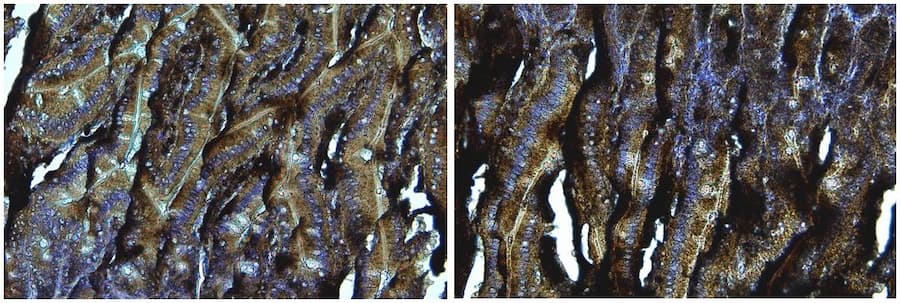
IHC shows positive staining in mouse intestine tissue. Antibody Rabbit Anti-Human GIP was used at a dilution of 1/200 followed by mouse and rabbit IgG (ready to use) polymerization using HRP polymer, counterstained with hematoxylin. Heat-mediated antigen retrieval was performed using Tris/EDTA buffer pH9.0 before starting IHC staining (40X).

Specificity

The antibody binds to human GIP. Cross reactivity with mouse or rat GIP was not tested.

Storage

Store at 4°C if intended for use within one month, otherwise, store at -20°C to -80°C. The lyophilizedantibody is stable for at least 18 months after the date of receipt when stored at -20°C to -80°C. After reconstitution, it can be aliquoted and stored frozen at -20°C to -80°C in a manual defrost freezer for at least 6 months without detectable loss of activity. Upon reconstitution, the antibody can also be stored for 1 month at 4°C. Please avoid freeze-thaw cycles, as this will lower the activity of the antibody.

Expiration

12 months from the date of shipment when stored properly.

Related Products

RayBio® Gastric Inhibitory Peptide (GIP) EIA Kit for Serum, Plasma, Culture Supernatant and Cell Lysates (cat# EIA-GIP-1)

References

  • Meier JJ, Nauck MA. (2005). "Glucagon-like peptide 1(GLP-1) in biology and pathology". Diabetes Metab. Res. Rev. 21 (2): 91–117. Efendic S, Portwood N (2004). "Overview of incretin hormones". Horm. Metab. Res. 36 (11–12): 742–6.
  • Thorens B (1995). "Glucagon-like peptide-1 and control of insulin secretion". Diabete Metab. 21 (5): 311–8.