Introduction
Adapter protein which modulates coupling of a number of cell surface receptor kinases with specific signaling pathways. Binds to, and suppress signals from, activated receptors tyrosine kinases, including the insulin (INSR) and insulin-like growth factor (IGF1R) receptors. The inhibitory effect can be achieved by 2 mechanisms: interference with the signaling pathway and increased receptor degradation. Delays and reduces AKT1 phosphorylation in response to insulin stimulation. Blocks association between INSR and IRS1 and IRS2 and prevents insulin-stimulated IRS1 and IRS2 tyrosine phosphorylation. Recruits NEDD4 to IGF1R, leading to IGF1R ubiquitination, increased internalization and degradation by both the proteasomal and lysosomal pathways. May play a role in mediating insulin-stimulated ubiquitination of INSR, leading to proteasomal degradation. Negatively regulates Wnt signaling by interacting with LRP6 intracellular portion and interfering with the binding of AXIN1 to LRP6. Positive regulator of the KDR/VEGFR-2 signaling pathway. May inhibit NEDD4-mediated degradation of KDR/VEGFR-2.
Specificity
Other Names
GRB10;GRBIR; KIAA0207; Growth factor receptor-bound protein 10; Growth factor receptor-bound protein 10; GRB10 adapter protein; Growth factor receptor-bound protein 10; Insulin receptor-binding protein Grb-IR
NCBI Accession #
NP_001001549.1;NP_001001550.1;NP_001001555.1;NP_005302.3
Format
Type
Peptide Affinity Purified Rabbit Polyclonal Antibody (Pab)
Calculated Molecular Weight (Da)
67231
Recommended Dilutions
WB: 1:1000
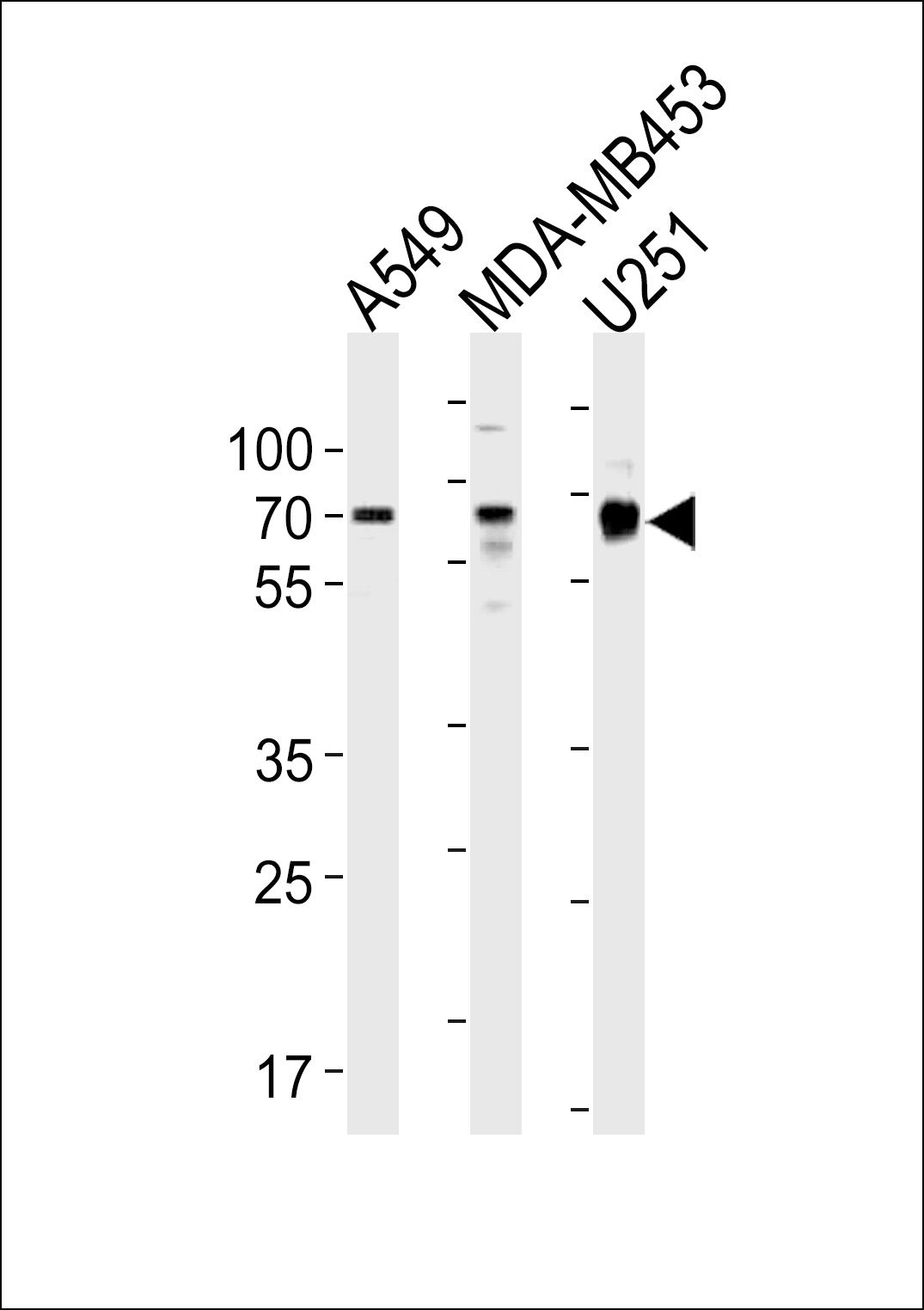 | GRB10 Antibody (N-term) (Cat# 102-14835) western blot analysis in A549,MDA-MB453,U251 cell line lysates (35ug/lane).This demonstrates the GRB10 antibody detected the GRB10 protein (arrow). |
Antigen Source
Human
Storage/Stability
2-8°C (short-term); -20°C (long-term)
Expiration:
12 months from the date of shipment when stored properly.