Introduction
Responsible for the deacetylation of lysine residues on the N-terminal part of the core histones (H2A, H2B, H3 and H4). Histone deacetylation gives a tag for epigenetic repression and plays an important role in transcriptional regulation, cell cycle progression and developmental events. Histone deacetylases act via the formation of large multiprotein complexes. Deacetylates SP proteins, SP1 and SP3, and regulates their function. Component of the BRG1-RB1-HDAC1 complex, which negatively regulates the CREST-mediated transcription in resting neurons. Upon calcium stimulation, HDAC1 is released from the complex and CREBBP is recruited, which facilitates transcriptional activation. Deacetylates TSHZ3 and regulates its transcriptional repressor activity. Deacetylates 'Lys-310' in RELA and thereby inhibits the transcriptional activity of NF-kappa-B. Component a RCOR/GFI/KDM1A/HDAC complex that suppresses, via histone deacetylase (HDAC) recruitment, a number of genes implicated in multilineage blood cell development.
Specificity
Other Names
HDAC1;RPD3L1; Histone deacetylase 1
NCBI Accession #
NP_004955.2
Format
Type
Mouse Monoclonal Antibody (Mab)
Calculated Molecular Weight (Da)
55103
Recommended Dilutions
WB: 1:1000
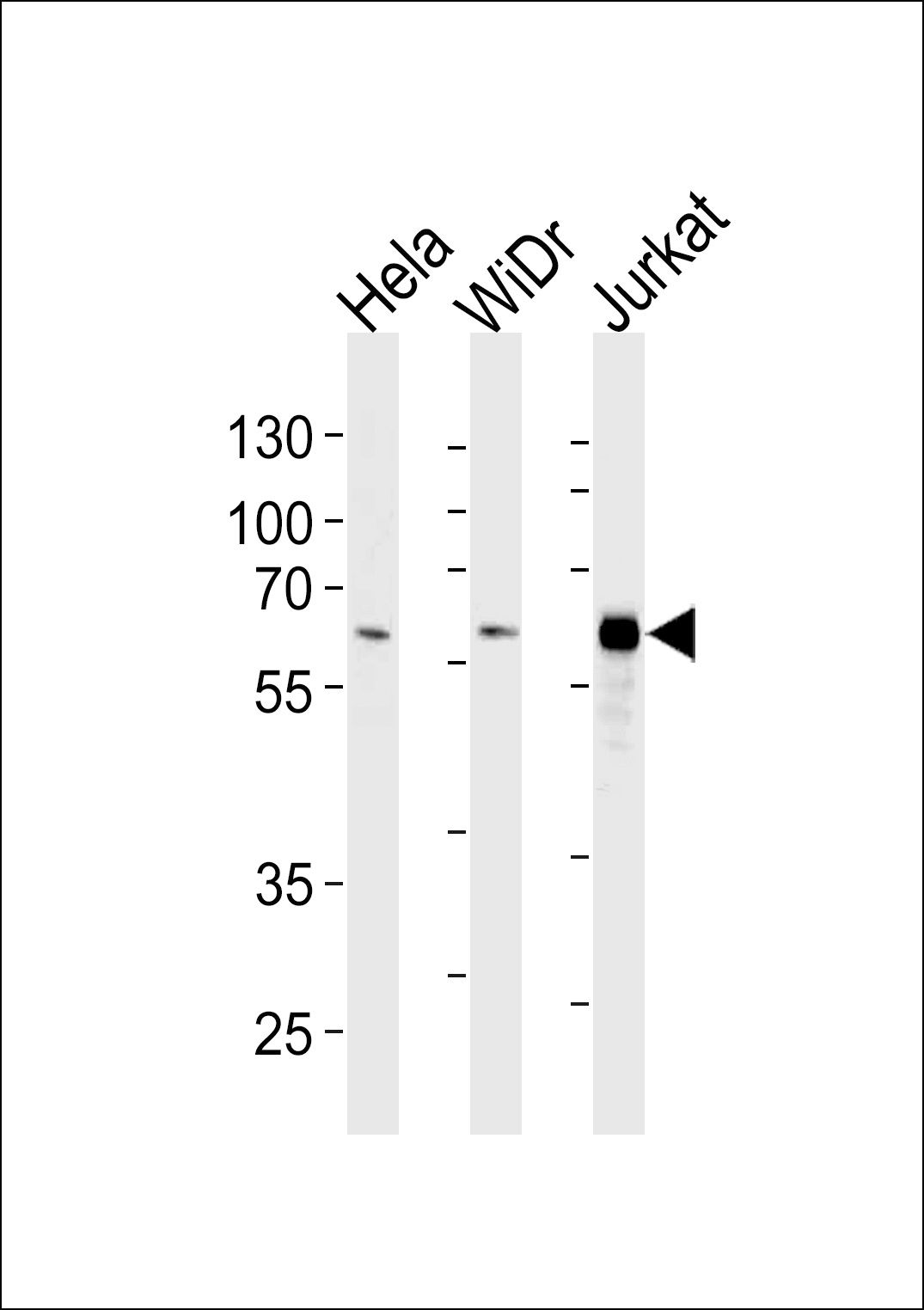 | HDAC1 Antibody (Cat# 102-10423) western blot analysis in Hela,WiDr,Jurkat cell line lysates (35ug/lane).This demonstrates the HDAC1 antibody detected the HDAC1 protein (arrow). |
Storage/Stability
2-8°C (short-term); -20°C (long-term)
Expiration:
12 months from the date of shipment when stored properly.