3607 Parkway Ln Ste 200 Norcross, Georgia 30092
www.RayBiotech.com | info@raybiotech.com
770-729-2992 | +1-888-494-8555
ISO 13485:2016 cGMP

3607 Parkway Ln Ste 200 Norcross, Georgia 30092
www.RayBiotech.com | info@raybiotech.com
770-729-2992 | +1-888-494-8555
ISO 13485:2016 cGMP
Catalog #: 136-00078
Human CD183 Antibody [clone: 1C6 [LS77-1C6]], monoclonal Mouse IgG1. Validated for flow cytometry.
| Size | 100 µg, 500 µg |
| Estimated Lead Time | 1-2 business days |
| Species | Human |
| Host Species | Mouse |
| Protein Name / Synonyms | CXCR3, IP-10 (Mig), GPR9, CKR-L2 |
| Clonality | Monoclonal |
| Clone | 1C6 [LS77-1C6] |
| Preparation | The antibody was purified by affinity chromatography. |
| Isotype | IgG1 |
| Format | Lyophilized |
| Concentration (lot specific) | Lyophilized |
| Buffers | PBS, pH 7.2-7.4; Carrier-free |
| Recommended Applications | Flow Cytometry |
| Reconstitution | Reconstitute in desired amount of PBS. |
| Research Area | Cardiovascular Disease |
| Shipping Type | Ambient temperature |
| Storage | -20°C |
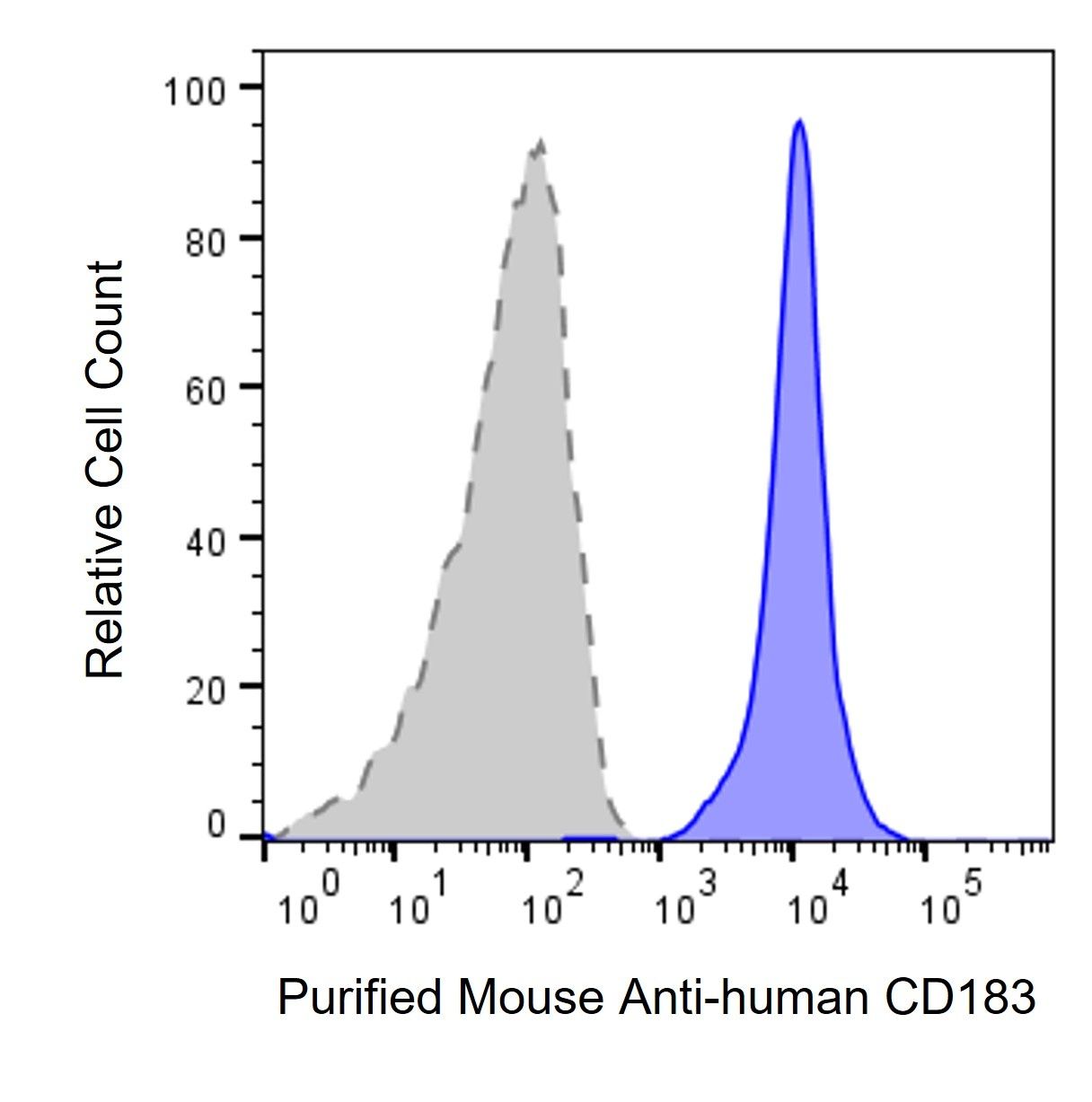
Human PBMCs were stained with either Purified Mouse Anti-Human CD183 primary antibody (#136-00078, blue histogram), or mouse IgG isotype control (gray histogram), followed by AF 647 anti-mouse IgG/IgM secondary antibody. CD183 was gated on CD3, CD4 double positive population.
Your cart is empty.