RayBiotech

3607 Parkway Ln Ste 200 Norcross, Georgia 30092

www.RayBiotech.com | info@raybiotech.com

770-729-2992 | +1-888-494-8555

ISO 13485:2016 cGMP

Anti-KCNA3 (Center) Antibody

Catalog #: 102-12605

Rabbit Anti-Human KCNA3 (Center) Antibody, 400 µl

Product Description

Specifications

Size400 µL
Estimated Lead Time1-2 weeks
SpeciesHuman
Specificity
This KCNA3 antibody is generated from rabbits immunized with a KLH conjugated synthetic peptide between 239-268 amino acids from the Central region of human KCNA3.
Host SpeciesRabbit
Accession Number
P22001
Gene Id
3738
Gene Symbols
KCNA3
Protein Name / Synonyms
KCNA3 (Center)
ClonalityPolyclonal
PreparationThis KCNA3 antibody is generated from rabbits immunized with a KLH conjugated synthetic peptide between 239-268 amino acids from the Central region of human KCNA3.
IsotypeIgG
Molecular Weight (kDa)
63.842
Format
Purified polyclonal antibody supplied in PBS with 0.09% (W/V) sodium azide. This antibody is purified through a protein A column, followed by peptide affinity purification.
Recommended ApplicationsWestern Blotting
Shipping TypeBlue ice
Storage-20°C

Description

Predicted Reactivity
Mouse, Rat
Other Names
KCNA3; HGK5; Potassium voltage-gated channel subfamily A member 3; HLK3; HPCN3; Voltage-gated K(+) channel HuKIII; Voltage-gated potassium channel subunit Kv1.3
NCBI Accession #
NP_002223.3
Other Accession #
P15384; P16390; NP_002223.3
Type
Peptide Affinity Purified Rabbit Polyclonal Antibody (Pab)
Recommended Dilutions
WB: 1:1000
Storage/Stability
2-8°C (short-term); -20°C (long-term). 12 months from the date of shipment when stored properly.
Typical Data
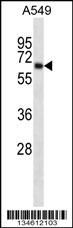
KCNA3 Antibody (Center) (Cat# 102-12605) western blot analysis in A549 cell line lysates (35 µg/lane). This demonstrates the KCNA3 antibody detected the KCNA3 protein (arrow).

Introduction

Potassium channels represent the most complex class of voltage-gated ion channels from both functional and structural standpoints. Their diverse functions include regulating neurotransmitter release, heart rate, insulin secretion, neuronal excitability, epithelial electrolyte transport, smooth muscle contraction, and cell volume. Four sequence-related potassium channel genes - shaker, shaw, shab, and shal - have been identified in Drosophila, and each has been shown to have human homolog(s). This gene encodes a member of the potassium channel, voltage-gated, shaker-related subfamily. This member contains six membrane-spanning domains with a shaker-type repeat in the fourth segment. It belongs to the delayed rectifier class, members of which allow nerve cells to efficiently repolarize following an action potential. It plays an essential role in T-cell proliferation and activation. This gene appears to be intronless and it is clustered together with KCNA2 and KCNA10 genes on chromosome 1.