Introduction
INSR is a receptor that binds insulin and has a tyrosine-protein kinase activity. Autophosphorylation activates the kinase activity. This Type I mebrane protein is composed of a tetramer of 2 alpha and 2 beta chains linked by disulfide bonds. The alpha chains contribute to the formation of the ligand-binding domain, while the beta chains carry the kinase domain. After being transported from the endoplasmic reticulum to the Golgi apparatus, the single glycosylated precursor is further glycosylated and then cleaved, followed by its transport to the plasma membrane. Defects in INSR are the cause of insulin resistance of various forms, including mild insulin-resistant diabetes mellitus with acanthosis nigricans, minor physical abnormalities and sometimes polycystic ovaries. Insulin resistance associated with acanthosis nigricans, hirsutism and hyperandrogenism is referred to as insulin resistance type A. Defects in INSR are the cause of Rabson-Mendenhall syndrome, also known as Mendenhall syndrome. It is a severe insulin resistance syndrome characterized by insulin-resistant diabetes mellitus with pineal hyperplasia and somatic abnormalities. Typical features include coarse, senile-appearing facies, dental and skin abnormalities, abdominal distension, and phallic enlargement. Inheritance is autosomal recessive. Defects in INSR are the cause of leprechaunism, also known as Donohue syndrome. Leprechaunism represents the most severe form of insulin resistance syndrome, characterized by intrauterine and postnatal growth retardation and death in early infancy. Inheritance is autosomal recessive. Defects in INSR may be associated with noninsulin-dependent diabetes mellitus.
Other Information
NCBI Accession #
NP_000199.2;NP_001073285.1
Antigen Type
Synthetic Peptide
Format
Purified polyclonal antibody supplied in PBS with 0.09% (W/V) sodium azide. This antibody is purified through a protein A column, followed by peptide affinity purification.
Calculated Molecular Weight (Da)
156333
Images
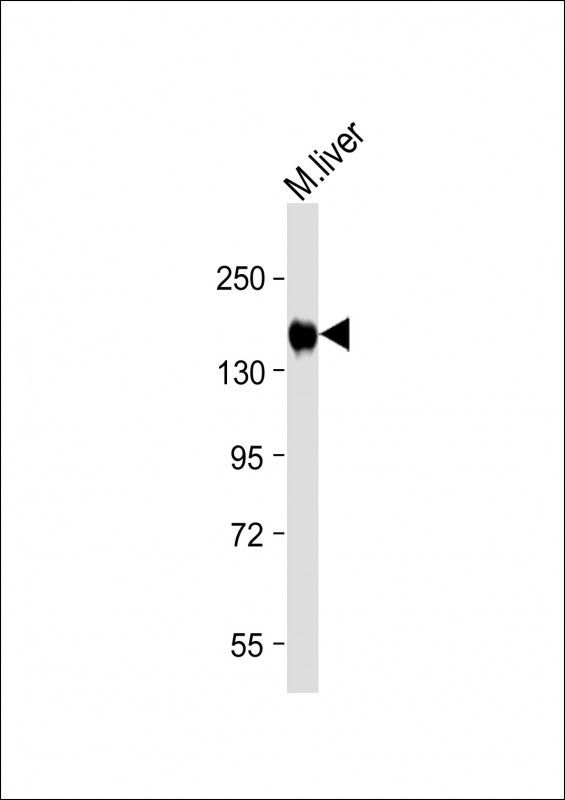
WB (1:1000)
Anti-INSR(Insulin Receptor) Antibody (N-term) at 1:1000 dilution + Mouse liver lysate Lysates/proteins at 20 µg per lane. Secondary Goat Anti-Rabbit IgG, (H+L), Peroxidase conjugated at 1/10000 dilution. Predicted band size : 156 kDa Blocking/Dilution buffer: 5% NFDM/TBST.
Storage/Stability
2-8°C (short-term); -20°C (long-term)
Expiration:
12 months from the date of shipment when stored properly.