Rabbit Anti-Human NRXN3 (C-term) Antibody, 400 ul
Loading...
Loading...
Loading...
Loading...
Anti-NRXN3 (C-term) Antibody
| Size | 400 µL |
| Estimated Lead Time | 1-2 weeks |
| Species | Human |
| Host Species | Rabbit |
| Accession Number | Q9HDB5 |
| Gene Id | 9369 |
| Gene Symbols | NRXN3 |
| Protein Name / Synonyms | NRXN3 (C-term) |
| Clonality | Polyclonal |
| Preparation | This NRXN3 antibody is generated from rabbits immunized with a KLH conjugated synthetic peptide between 436-462 amino acids from the C-terminal region of human NRXN3. |
| Concentration (lot specific) | 0.350 mg/ml |
| Recommended Applications | Western Blotting |
| Research Area | Angiogenesis |
| Shipping Type | Blue ice |
| Storage | -20°C |
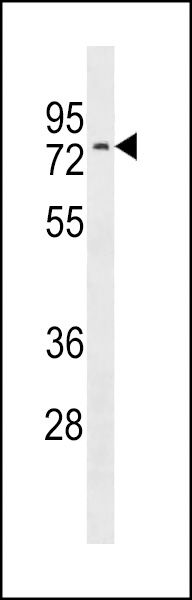 | NRXN3 Antibody (C-term)(Cat# 102-14030) western blot analysis in CEM cell line lysates (35ug/lane).This demonstrates the NRXN3 antibody detected the NRXN3 protein (arrow). |
Your cart is empty.
Anti-NRXN3 (C-term) Antibody