Anti-PKR (PRKR) (C-term) Antibody
Catalog #: 102-17831
Rabbit Anti-PKR (PRKR) (C-term) Antibody, 400 ul
Product Description
Specifications
| Size | 400 µL |
| Estimated Lead Time | 1-2 weeks |
| Species | Human, Mouse |
| Host Species | Rabbit |
| Accession Number | P19525 |
| Gene Id | 5610 |
| Gene Symbols | EIF2AK2 |
| Protein Name / Synonyms | PKR (PRKR) (C-term) |
| Clonality | Polyclonal |
| Preparation | This PKR (PRKR) antibody is generated from rabbits immunized with a KLH conjugated synthetic peptide between 519-550 amino acids from the C-terminal region of human PKR (PRKR). |
| Concentration (lot specific) | 2.0 mg/ml |
| Recommended Applications | Western Blotting, IHC-P |
| Shipping Type | Blue ice |
| Storage | -20°C |
Description
Introduction
Interferon-induced, double-stranded RNA-activated protein kinase (PRKR) is a serine-threonine kinase. Activation by dsRNAs leads to autophosphorylation of PRKR and allows the kinase to phosphorylate its natural substrate, the alpha subunit of eukaryotic protein synthesis initiation factor-2 (EIF2-alpha), leading to the inhibition of protein synthesis. Human gamma-interferon (IFNG) mRNA exploits localized activation of PRKR in the cell to regulate its own translation. IFNG mRNA activates PRKR through a pseudoknot in its 5-prime untranslated region. The HCV envelope protein E2 contains a sequence identical with phosphorylation sites of the interferon-inducible protein kinase PRKR and the translation initiation factor EIF2-alpha, a target of PRKR. E2 inhibits the kinase activity of PRKR and blocks its inhibitory effect on protein synthesis and cell growth, which provides one mechanism by which HCV may circumvent the antiviral effect of interferon. PRKR, which is involved in TLR signaling and mediates apoptosis in fibroblasts in response to viral infection and inflammatory cytokines, also activates IKK and NFKB, thereby suppressing apoptosis. Apoptosis induced by live pathogenic gram-positive and gram-negative bacteria requirs both TLR4 and PRKR, possibly representing a major mechanism for pathogenic bacteria that use specific virulence factors to avoid detection and destruction by the innate immune system. Roles for PRKR activation in Huntington disease and Fanconi anemia have also been suggested.
Specificity
Other Names
EIF2AK2; PKR; PRKR; Interferon-induced, double-stranded RNA-activated protein kinase; Eukaryotic translation initiation factor 2-alpha kinase 2; Interferon-inducible RNA-dependent protein kinase; P1/eIF-2A protein kinase; Protein kinase RNA-activated; Tyrosine-protein kinase EIF2AK2; p68 kinase
NCBI Accession #
NP_001129123.1;NP_001129124.1;NP_002750.1
Format
Type
Purified Rabbit Polyclonal Antibody (Pab)
Calculated Molecular Weight (Da)
62094
Recommended Dilutions
WB: 1:1000; IHC: 1:50-100
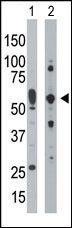 | The anti-PRKR Pab (Cat# 102-17831) is used in Western blot to detect PRKR in mouse uterus tissue lysate (Lane 1) and HepG2 cell lysate (Lane 2). |
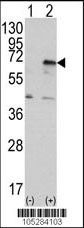 | Western blot analysis of EIF2AK2 (arrow) using PRKR Antibody (C-term) (Cat# 102-17831). 293 cell lysates (2 ug/lane) either nontransfected (Lane 1) or transiently transfected with the EIF2AK2 gene (Lane 2) (Origene Technologies). |
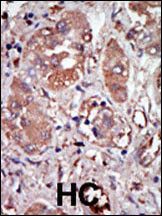 | Formalin-fixed and paraffin-embedded human cancer tissue reacted with the primary antibody, which was peroxidase-conjugated to the secondary antibody, followed by DAB staining. This data demonstrates the use of this antibody for immunohistochemistry; clinical relevance has not been evaluated. BC = breast carcinoma; HC = hepatocarcinoma. |
Antigen Source
HUMAN
Storage/Stability
2-8°C (short-term); -20°C (long-term)
Expiration:
12 months from the date of shipment when stored properly.