Introduction
As part of the heterotrimeric replication protein A complex (RPA/RP-A), binds and stabilizes single-stranded DNA intermediates, that form during DNA replication or upon DNA stress. It prevents their reannealing and in parallel, recruits and activates different proteins and complexes involved in DNA metabolism. Thereby, it plays an essential role both in DNA replication and the cellular response to DNA damage. In the cellular response to DNA damage, the RPA complex controls DNA repair and DNA damage checkpoint activation. Through recruitment of ATRIP activates the ATR kinase a master regulator of the DNA damage response. It is required for the recruitment of the DNA double-strand break repair factors RAD51 and RAD52 to chromatin in response to DNA damage. Also recruits to sites of DNA damage proteins like XPA and XPG that are involved in nucleotide excision repair and is required for this mechanism of DNA repair. Plays also a role in base excision repair (BER) probably through interaction with UNG. Through RFWD3 may activate CHEK1 and play a role in replication checkpoint control. Also recruits SMARCAL1/HARP, which is involved in replication fork restart, to sites of DNA damage. May also play a role in telomere maintenance.
Other Information
Antigen Type
Recombinant Protein
Images
WB (1:2000)
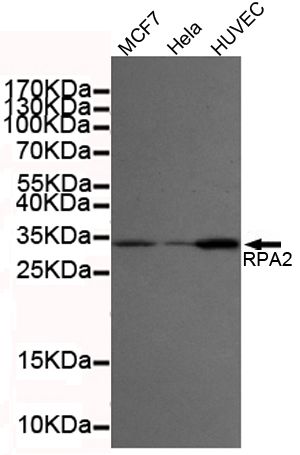
Western blot detection of RPA32/RPA2 in MCF7,Hela and HUVEC cell lysates using RPA32/RPA2 mouse mAb (1:2000 diluted).Predicted band size:32KDa.Observed band size:32KDa.Exposure time:20s.
ICC (1:200)
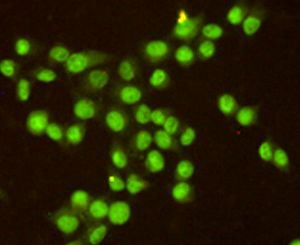
Immunocytochemistry staining of HeLa cells fixed with -20? Methanol and using anti-RPA32/RPA2 antibody (dilution 1:200).
IP (1:500)
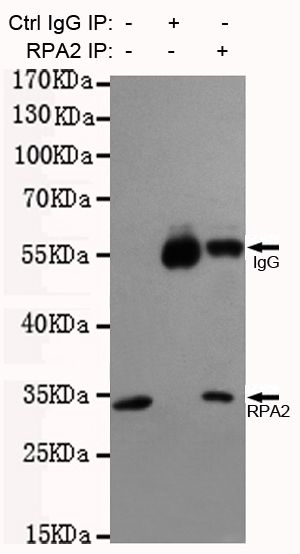
Immunoprecipitation analysis of Hela cell lysates using RPA32/RPA2 mouse mAb.
Storage/Stability
2-8°C (short-term); -20°C (long-term)
Expiration:
12 months from the date of shipment when stored properly.