RPL22 Polyclonal Antibody
Loading...
Loading...
Loading...
Loading...
Anti-RPL22 Antibody
| Size | 20 µL, 100 µL |
| Estimated Lead Time | 1-2 weeks |
| Species | Human, Mouse, Rat |
| Host Species | Rabbit |
| Accession Number | P35268 |
| Gene Id | 6146 |
| Gene Symbols | RPL22 |
| Protein Name / Synonyms | RPL22, EAP, HBP15, HBP15/L22, L22, ribosomal protein L22 |
| Clonality | Polyclonal |
| Isotype | IgG |
| Purity | Affinity purification |
| Buffers | PBS with 0.02% sodium azide, 50% glycerol, pH7.3 |
| Recommended Applications | Western Blotting |
| Shipping Type | Blue ice |
| Storage | -20°C |
Western blot analysis of extracts of various cell lines, using RPL22 antibody (144-09202) at 1:3000 dilution.
Secondary antibody: HRP Goat Anti-Rabbit IgG (H+L) at 1:10000 dilution.
Lysates/proteins: 25ug per lane.
Blocking buffer: 3% nonfat dry milk in TBST.
Detection: ECL Basic Kit.
Exposure time: 30s.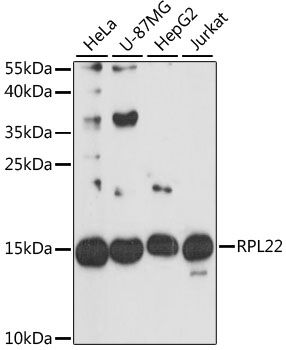
Your cart is empty.
Anti-RPL22 Antibody