Introduction
One of the major roles of the sulfotransferases (ST) in the metabolism of drugs and endogenous compounds is the conversion of these substances into more hydrophilic water-soluble sulfate conjugates that can be easily excreted. Sulfation may also play a regulatory role for many endogenous compounds, such as steroids and neurotransmitters, by altering the biologic properties of these compounds. Otterness et al. (1992), Kong et al. (1992), and Comer et al. (1993) reported the cloning of cDNAs encoding liver dehydroepiandrosterone (DHEA) sulfotransferase. The predicted protein has 285 amino acids. Although Northern blot analysis of human liver RNA detected transcripts of 3 different sizes, Southern blot analysis of human DNA suggested that only 1 gene is present in the genome. This gene has an important role in the sulfation of both bile acids and steroids in the liver and adrenals. The human adrenal form of this enzyme is physically, immunologically, and kinetically similar, perhaps identical, to the liver form. Dehydroepiandrosterone sulfate is quantitatively one of the major steroids secreted from the adrenal cortex.
Specificity
Other Names
SULT2A1; HST; STD; Bile salt sulfotransferase; Dehydroepiandrosterone sulfotransferase; Hydroxysteroid Sulfotransferase; ST2; ST2A3; Sulfotransferase 2A1
NCBI Accession #
NP_003158.2
Other Accession #
NP_003158
Format
Type
Purified Rabbit Polyclonal Antibody (Pab)
Calculated Molecular Weight (Da)
33780
Recommended Dilutions
WB: 1:1000
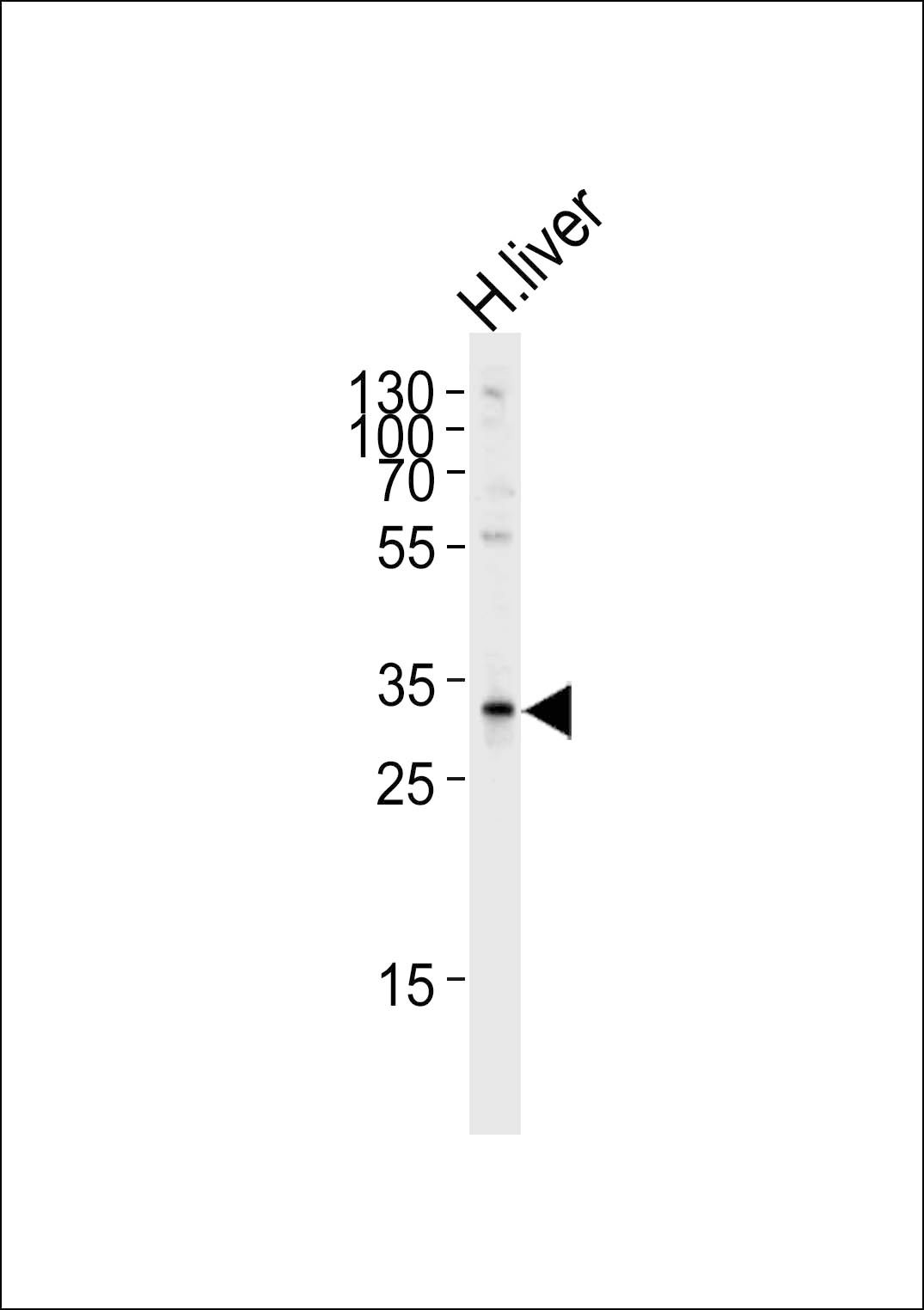 | Western blot analysis of lysate from human liver tissue lysate, using SULT2A Antibody (K268)(Cat# 102-15059). 102-15059 was diluted at 1:1000 at each lane. A goat anti-rabbit IgG H&L(HRP) at 1:5000 dilution was used as the secondary antibody. Lysate at 35ug per lane. |
Antigen Source
HUMAN
Storage/Stability
2-8°C (short-term); -20°C (long-term)
Expiration:
12 months from the date of shipment when stored properly.