Introduction
Parkinson is the second most common neurodegenerative disease after Alzheimers. About 1 percent of people over the age of 65 and 3 percent of people over the age of 75 are affected by the disease. The mutation is the most common cause of Parkinson disease identified to date. Synuclein alpha interacting protein (Synphilin-1) contains several protein-protein interaction domains and interacts with alpha synuclein in neurons. Mutations of SNCAIP have been linked to Parkinson disease. The amino acid sequence of synphilin-1 shows extensive homology with its human counterpart, especially in regions containing ankyrin-like motifs and the coiled-coil domain. Expression of mouse synphilin-1 in tissues is similar to its human counterpart. Synphilin-1 has an important role in the formation of aggregates and cytotoxicity in Parkinson disease and that Dorfin may be involved in the pathogenic process by ubiquitylation of synphilin-1. Role of synphilin-1 in synaptic function and protein degradation and in the molecular mechanisms leading to neurodegeneration in Parkinson disease
Other Information
NCBI Accession #
NP_001229864.1;NP_005451.2
Antigen Type
Synthetic Peptide
Format
Purified polyclonal antibody supplied in PBS with 0.09% (W/V) sodium azide. This antibody is prepared by Saturated Ammonium Sulfate (SAS) precipitation followed by dialysis against PBS.
Calculated Molecular Weight (Da)
100409
Images
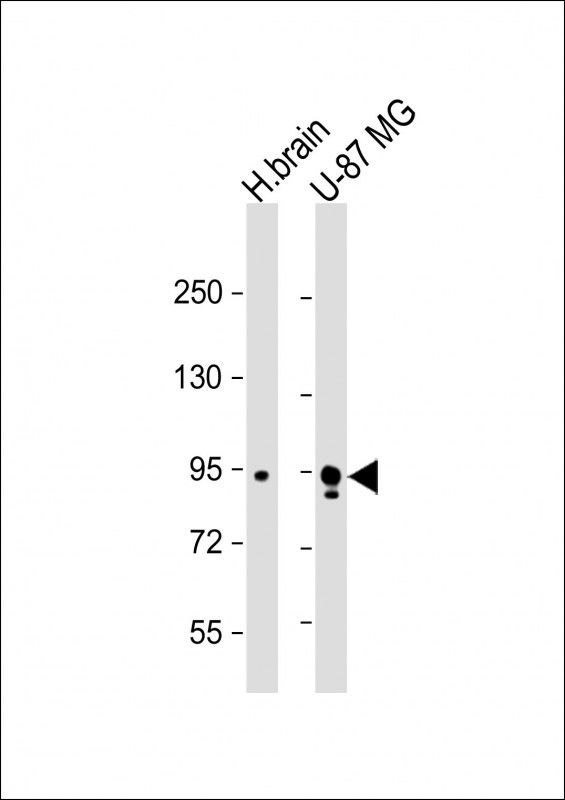
WB (1:1000)
All lanes : Anti-Synphilin-1 (C-term) at 1:1000 dilution Lane 1: human brain lysate Lane 2: U-87 MG whole cell lysate Lysates/proteins at 20 µg per lane. Secondary Goat Anti-Rabbit IgG, (H+L), Peroxidase conjugated at 1/10000 dilution. Predicted band size : 100 kDa Blocking/Dilution buffer: 5% NFDM/TBST.
Storage/Stability
2-8°C (short-term); -20°C (long-term)
Expiration:
12 months from the date of shipment when stored properly.