Introduction
Thyrotroph embryonic factor (TEF), a transcription factor, is a member of the PAR (proline and acidic amino acid-rich) subfamily of basic region/leucine zipper (bZIP) transcription factors. It is expressed in a broad range of cells and tissues in adult animals, however, during embryonic development, TEF expression appears to be restricted to the developing anterior pituitary gland, coincident with the appearance of thyroid-stimulating hormone, beta (TSHB). Indeed, TEF can bind to, and transactivate the TSHB promoter. It shows homology (in the functional domains) with other members of the PAR-bZIP subfamily of transcription factors, which include albumin D box-binding protein (DBP), human hepatic leukemia factor (HLF) and chicken vitellogenin gene-binding protein (VBP); VBP is considered the chicken homologue of TEF. Different members of the subfamily can readily form heterodimers, and share DNA-binding, and transcriptional regulatory properties. Alternatively spliced transcript variants encoding different isoforms have been found for this gene. [provided by RefSeq].
Specificity
Predicted Reactivity
Rat, Chicken
Other Names
TEF; KIAA1655; Thyrotroph embryonic factor
NCBI Accession #
NP_001138870.1;NP_003207.1
Other Accession #
P41224; Q9JLC6; Q92172; NP_001138870.1
Format
Type
Peptide Affinity Purified Rabbit Polyclonal Antibody (Pab)
Calculated Molecular Weight (Da)
33248
Recommended Dilutions
WB: 1:1000
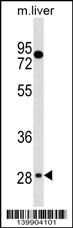 | TEF Antibody (C-term) (Cat# 102-14177) western blot analysis in mouse liver tissue lysates (35ug/lane).This demonstrates the TEF antibody detected the TEF protein (arrow). |
Antigen Source
HUMAN
Storage/Stability
2-8°C (short-term); -20°C (long-term)
Expiration:
12 months from the date of shipment when stored properly.