3607 Parkway Ln Ste 200 Norcross, Georgia 30092
www.RayBiotech.com | info@raybiotech.com
770-729-2992 | +1-888-494-8555
ISO 13485:2016 cGMP

3607 Parkway Ln Ste 200 Norcross, Georgia 30092
www.RayBiotech.com | info@raybiotech.com
770-729-2992 | +1-888-494-8555
ISO 13485:2016 cGMP
Catalog #: 130-10059B-50
Mouse anti-VEGF Biotinylated Antibody, 50 ug
| Size | 50 µg |
| Estimated Lead Time | 1-2 business days |
| Species | Human |
| Host Species | Mouse |
| Accession Number | NP_001165097 |
| Clonality | Monoclonal |
| Immunogen | Immunogen was recombinant protein derived from VEGF. This antibody was produced from a hybridoma resulting from the fusion of a mouse myeloma with B cells obtained from a mouse immunized with the immunogen. The IgG fraction of tissue culture supernatant was purified by Protein G/A affinity chromatography. |
| Isotype | IgG1 |
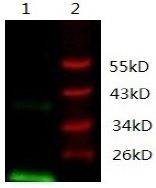
| Recommended Applications | ELISA (recommended work dilution= 6.25 µg/ml ), Western Blotting (recommended work dilution= 1:2000 ), (see image) Immunodetection Analysis: Representative blot from a previous lot. Lane 1, recombinant protein VEGF, Lane 2, protein marker. The membrane blot was probed with antiVEGF primary antibody ( 0.5 µg/ ml ). Proteins were visualized using a donkey anti-mouse secondary antibody conjugated to IRDye 800CW detection system. |
| Reconstitution | A separate vial of dilution buffer is provided for reconstitution. The antibody is supplied lyophilized, originally containing PBS, without preservative stabilizers (e.g. sodium azide). The final amount is indicated on the shipping vial. |
| Research Area | Angiogenesis, Cardiovascular Disease, Vascular Biology |
| Shipping Type | Ambient temperature |
| Storage | -20°C |
Your cart is empty.