TruExp™ Mammalian Cell Gene Expression System
TruExp™ is RayBiotech’s state-of-the-art mammalian cell-based expression system developed for producing recombinant proteins with native conformations and PTMs. TruExp™ is an excellent option for proteins that have a high molecular weight or are difficult to express.
We recommend TruExp™ Mammalian Cell Gene Expression for:
- Secretion: Expressed protein is secreted into the culture medium (figure 1), facilitating high purity levels (figure 2); in contrast to recovering protein from highly contaminated lysate fractions.
- Complex, abundant PTMs: For example, the abundant glycosylation to grant protein function (figure 3)
- High gene expression: Typical yield ranges from 2 - 355 mg purified protein per liter of culture (table 2)
- No biohazard: Serum-free medium and animal source-free materials eliminate biohazard risk.
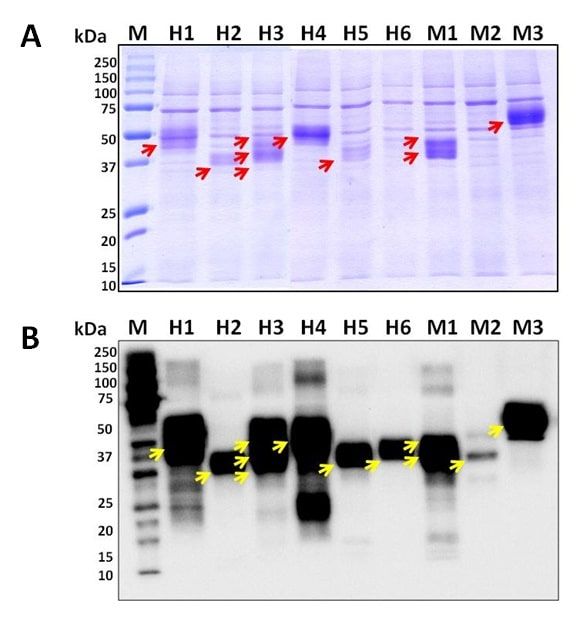
Figure 1. The TruExp Mammalian Cell Gene Expression System delivers high protein expression levels. Six human genes (H1-6) and 3 mouse genes (M1-3) were expressed by the TruExp expression system. Cell culture supernatants (10 µL) were applied to 12% SDS-PAGE (A) and Western blot probed with anti-his tag monoclonal antibody (B). Except for genes H6 and M2, all overexpressed genes display additional secreted protein bands (A, red arrows). All genes were expressed, with some displaying abundant post-translational modifications, evident by increased molecular weights compared to the predicted sizes (B, yellow arrows). M = protein standard markers (kDa).
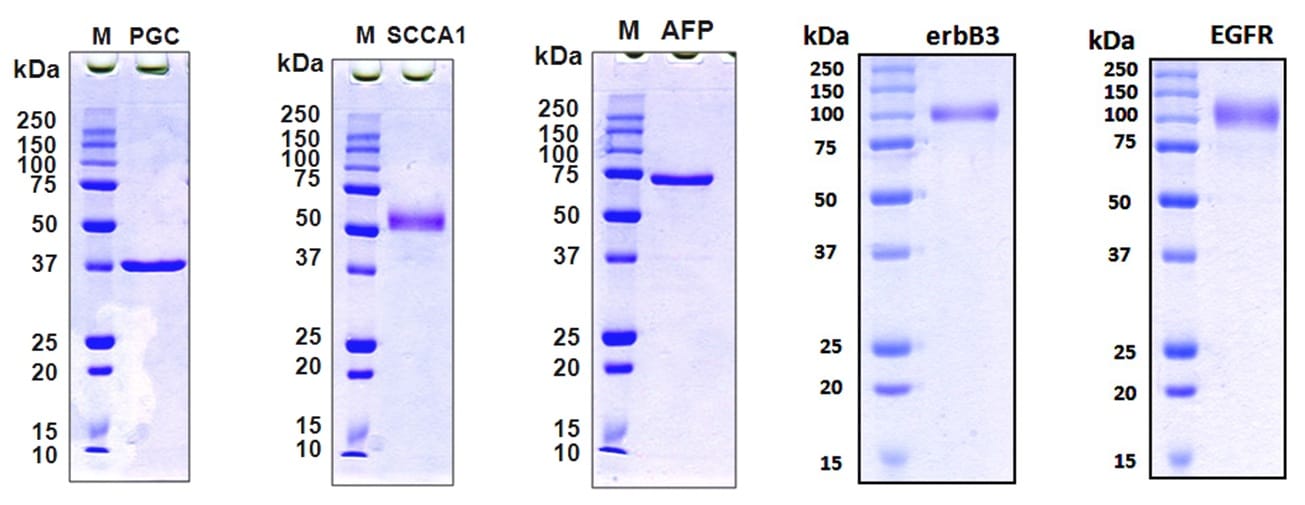
Figure 2. Proteins expressed in the TruExp Mammalian Cell Gene Expression System are full-length and highly pure. Affinity-purified recombinant proteins from culture supernatants of transfected mammalian cells exhibit high purity and intact protein bands, even at MW larger than 100 kDa. M = protein standard markers (kDa).
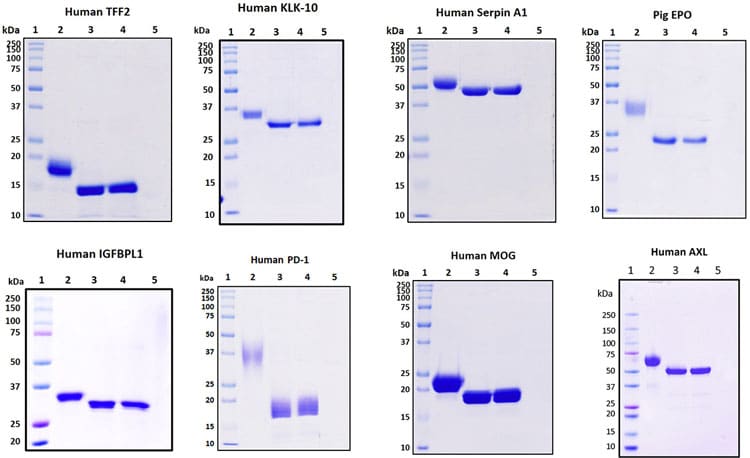
Figure 3. Deglycosylation analysis of purified recombinant proteins from TruExp Mammalian Cell Gene Expression System. The same amount of purified proteins were untreated (Lane 2) or treated with deglycosylation enzyme under native (Lane 3) or reducing (Lane 4) conditions. Deglycosylation treatment resulted in a mobility shift of the protein to produce one reduced band at the expected size, thus indicating that the untreated recombinant protein (Lane 2) was glycosylated. Lane 1: protein standard ladder (kDa). Lane 2: untreated protein. Lane 3: treated protein with deglycosylation enzyme under native condition. Lane 4: treated protein with deglycosylation enzyme under denature condition. Lane 5: same cleavage reaction, but without protein addition.