Introduction
Protein phosphatase that associates with over 200 regulatory proteins to form highly specific holoenzymes which dephosphorylate hundreds of biological targets. Protein phosphatase 1 (PP1) is essential for cell division, and participates in the regulation of glycogen metabolism, muscle contractility and protein synthesis. Involved in regulation of ionic conductances and long-term synaptic plasticity. May play an important role in dephosphorylating substrates such as the postsynaptic density-associated Ca(2+)/calmodulin dependent protein kinase II. Component of the PTW/PP1 phosphatase complex, which plays a role in the control of chromatin structure and cell cycle progression during the transition from mitosis into interphase. Regulates NEK2 function in terms of kinase activity and centrosome number and splitting, both in the presence and absence of radiation-induced DNA damage. Regulator of neural tube and optic fissure closure, and enteric neural crest cell (ENCCs) migration during development. In balance with CSNK1D and CSNK1E, determines the circadian period length, through the regulation of the speed and rhythmicity of PER1 and PER2 phosphorylation. May dephosphorylate CSNK1D and CSNK1E.
Other Information
Antigen Type
Recombinant Protein
Images
WB (1:1000)
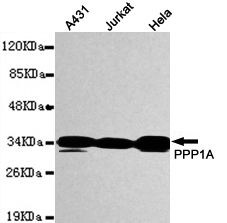
Western blot detection of PPP1A in MCF7,K562,Hela,HEPG2 and Jurkat whole cell lysates using PPP1A mouse mAb (1:1000 diluted).Predicted band size: 38KDa.Observed band size: 38KDa.
ICC (1:300)
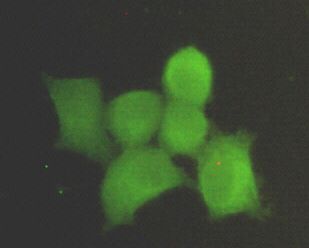
Immunocytochemistry stain of Hela using PPP1A mouse mAb (1:300).
IHC (1:100)
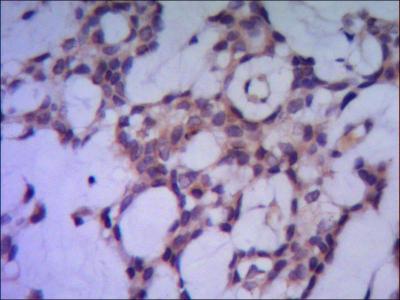
IHC of paraffin-embedded human breast cancer using anti-PPP1A mouse mAb diluted 1/500-1/1000.
Storage/Stability
2-8°C (short-term); -20°C (long-term)
Expiration:
12 months from the date of shipment when stored properly.