Introduction
Acts in a Rho-dependent manner to recruit PFY1 to the membrane. Required for the assembly of F-actin structures, such as actin cables and stress fibers. Nucleates actin filaments. Binds to the barbed end of the actin filament and slows down actin polymerization and depolymerization. Required for cytokinesis, and transcriptional activation of the serum response factor. DFR proteins couple Rho and Src tyrosine kinase during signaling and the regulation of actin dynamics. Functions as a scaffold protein for MAPRE1 and APC to stabilize microtubules and promote cell migration (By similarity). Has neurite outgrowth promoting activity (By similarity). In hear cells, it may play a role in the regulation of actin polymerization in hair cells. The MEMO1-RHOA- DIAPH1 signaling pathway plays an important role in ERBB2- dependent stabilization of microtubules at the cell cortex. It controls the localization of APC and CLASP2 to the cell membrane, via the regulation of GSK3B activity. In turn, membrane-bound APC allows the localization of the MACF1 to the cell membrane, which is required for microtubule capture and stabilization. Plays a role in the regulation of cell morphology and cytoskeletal organization. Required in the control of cell shape.
Other Information
Format
Purified polyclonal antibody supplied in PBS with 0.09% (W/V) sodium azide. This antibody is purified through a protein A column, followed by peptide affinity purification.
Calculated Molecular Weight (Da)
141347
Images
WB (1:500-1:1000)
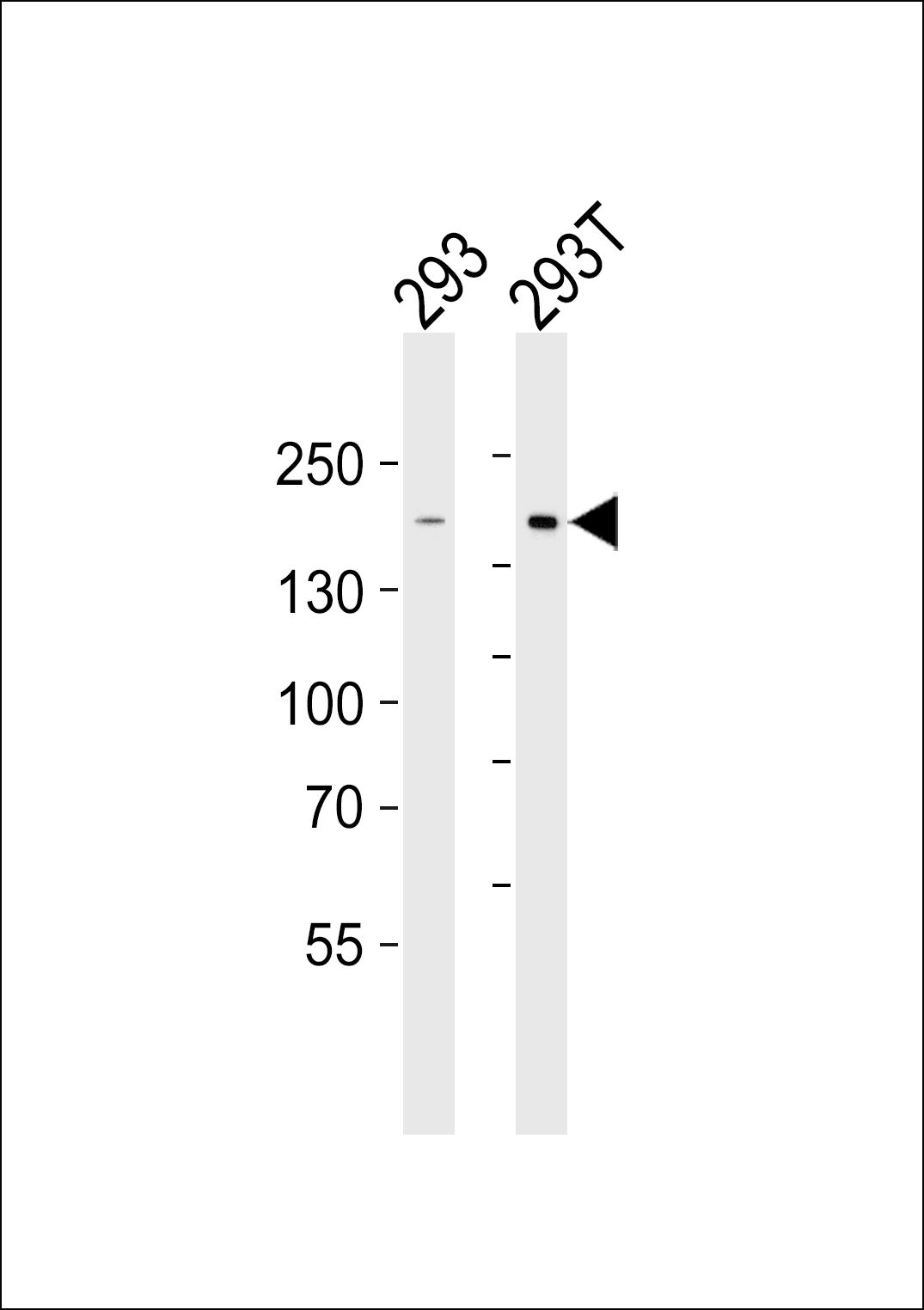
Western blot analysis of lysates from 293, 293T cell line (from left to right), using DIAPH1 Antibody (N-term)(Cat. #102-23885). 102-23885 was diluted at 1:1000 at each lane. A goat anti-rabbit IgG H&L(HRP) at 1:5000 dilution was used as the secondary antibody. Lysates at 35ug per lane.
Storage/Stability
2-8°C (short-term); -20°C (long-term)
Expiration:
12 months from the date of shipment when stored properly.