Introduction
Transcription factor that is involved in embryonic development, establishment of tissue-specific gene expression and regulation of gene expression in differentiated tissues. Is thought to act as a 'pioneer' factor opening the compacted chromatin for other proteins through interactions with nucleosomal core histones and thereby replacing linker histones at target enhancer and/or promoter sites. Binds DNA with the consensus sequence 5'-[AC]A[AT]T[AG]TT[GT][AG][CT]T[CT]-3' (By similarity). In embryonic development is required for notochord formation. Involved in the development of multiple endoderm-derived organ systems such as the liver, pancreas and lungs; FOXA1 and FOXA2 seem to have at least in part redundant roles. Originally described as a transcription activator for a number of liver genes such as AFP, albumin, tyrosine aminotransferase, PEPCK, etc. Interacts with the cis-acting regulatory regions of these genes. Involved in glucose homeostasis; regulates the expression of genes important for glucose sensing in pancreatic beta-cells and glucose homeostasis. Involved in regulation of fat metabolism. Binds to fibrinogen beta promoter and is involved in IL6-induced fibrinogen beta transcriptional activation.
Other Information
Format
Purified polyclonal antibody supplied in PBS with 0.09% (W/V) sodium azide. This antibody is purified through a protein A column, followed by peptide affinity purification.
Calculated Molecular Weight (Da)
48306
Images
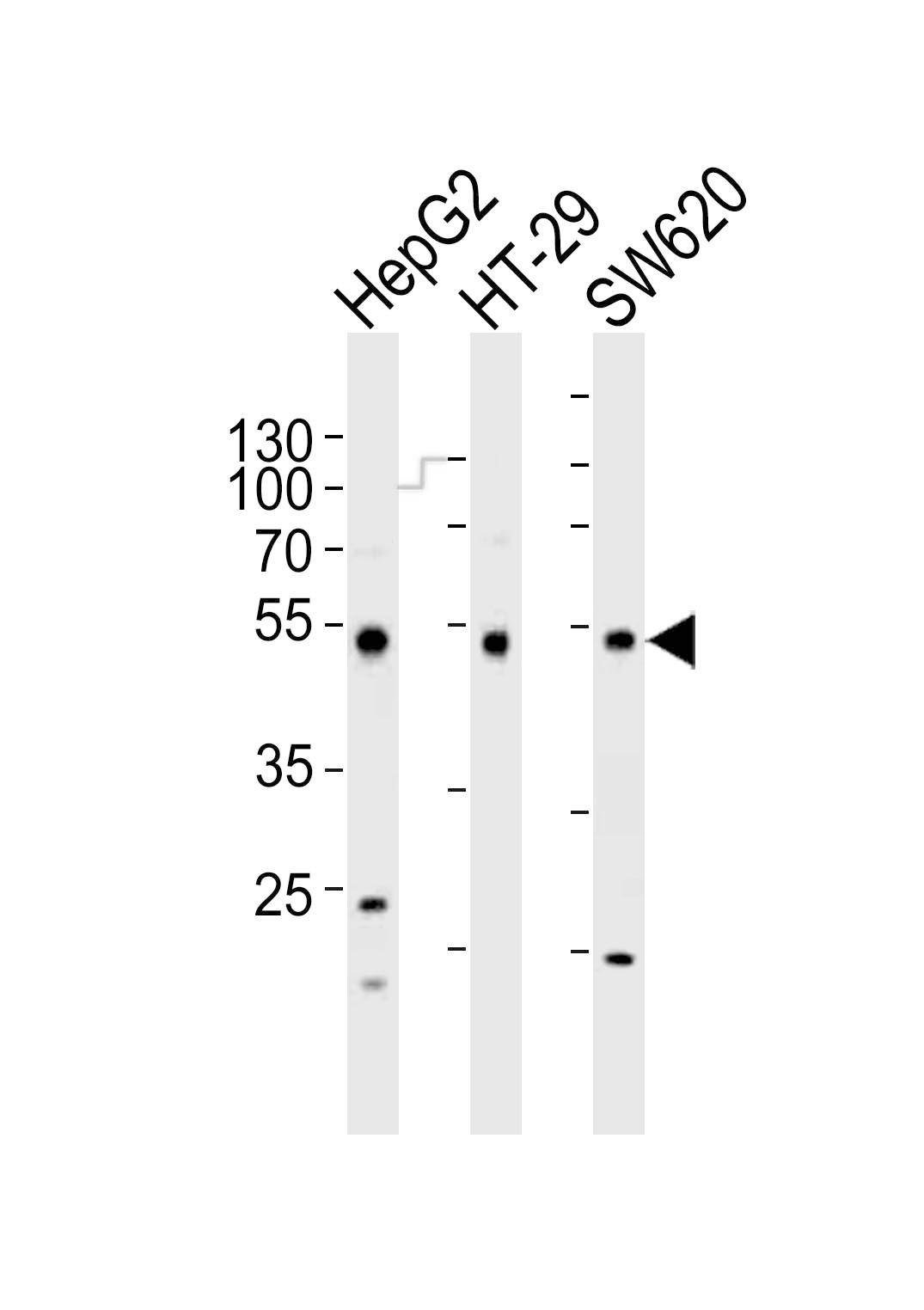
WB (1:1000)
Western blot analysis of lysates from HepG2, HT-29, SW620 cell line (from left to right), using FOXA2 Antibody (C-term)(Cat. #102-24142). 102-24142 was diluted at 1:1000 at each lane. A goat anti-rabbit IgG H&L(HRP) at 1:10000 dilution was used as the secondary antibody. Lysates at 20ug per lane.
Storage/Stability
2-8°C (short-term); -20°C (long-term)
Expiration:
12 months from the date of shipment when stored properly.