Introduction
Breakdown products of phosphoinositides are ubiquitous second messengers that function downstream of many G protein-coupled receptors and tyrosine kinases regulating cell growth, calcium metabolism, and protein kinase C activity. This gene encodes an enzyme which regulates the amount of phosphatidylinositol available for signaling by catalyzing the conversion of phosphatidic acid to CDP-diacylglycerol. This enzyme is an integral membrane protein localized to two subcellular domains, the matrix side of the inner mitochondrial membrane where it is thought to be involved in the synthesis of phosphatidylglycerol and cardiolipin and the cytoplasmic side of the endoplasmic reticulum where it functions in phosphatidylinositol biosynthesis. Two genes encoding this enzyme have been identified in humans, one mapping to human chromosome 4q21 and a second to 20p13.
Specificity
Predicted Reactivity
Mouse, Rat, Bovine
Other Names
CDS2; Phosphatidate cytidylyltransferase 2; CDP-DAG synthase 2; CDP-DG synthase 2; CDP-diacylglycerol synthase 2; CDP-diglyceride pyrophosphorylase 2; CDP-diglyceride synthase 2; CTP:phosphatidate cytidylyltransferase 2
NCBI Accession #
NP_003809.1
Other Accession #
Q91XU8; Q99L43; A0JNC1; NP_003809.1
Format
Type
Peptide Affinity Purified Rabbit Polyclonal Antibody (Pab)
Calculated Molecular Weight (Da)
51418
Recommended Dilutions
WB: 1:1000
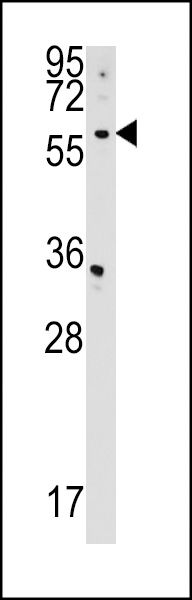 | CDS2 Antibody (Center) (Cat# 102-13293) western blot analysis in HepG2 cell line lysates (35ug/lane).This demonstrates the CDS2 antibody detected the CDS2 protein (arrow). |
Antigen Source
HUMAN
Storage/Stability
2-8°C (short-term); -20°C (long-term)
Expiration:
12 months from the date of shipment when stored properly.