Introduction
Ubiquitin is a 76 amino acid highly conserved eukaryotic polypeptide that selectively marks cellular proteins for proteolytic degradation by the 26S proteasome. The process of target selection, covalent attachment and shuttle to the 26S proteasome is a vital means of regulating the concentrations of key regulatory proteins in the cell by limiting their lifespans. Polyubiquitination is a common feature of this modification. Serial steps for modification include the activation of ubiquitin, an ATP-dependent formation of a thioester bond between ubiquitin and the enzyme E1, transfer by transacylation of ubiquitin from E1 to the ubiquitin conjugating enzyme E2, and covalent linkage to the target protein directly by E2 or via E3 ligase enzyme. Deubiquitination enzymes also exist to reverse the marking of protein substrates. Posttranslational tagging by Ub is involved in a multitude of cellular processes, including the cell cycle, cell growth and differentiation, embryogenesis, apoptosis, signal transduction, DNA repair, regulation of transcription and DNA replication, transmembrane transport, stress responses, the immune response, and nervous system functions.
Specificity
Other Names
EPS15L1; EPS15R; Epidermal growth factor receptor substrate 15-like 1; Eps15-related protein
NCBI Accession #
NP_001245303.1;NP_001245304.1;NP_001245305.1;NP_067058.1
Format
Type
Purified Rabbit Polyclonal Antibody (Pab)
Calculated Molecular Weight (Da)
94255
Recommended Dilutions
WB: 1:1000
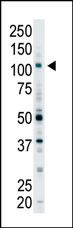 | The anti-EPS15R Pab (Cat# 102-15000) is used in Western blot to detect EPS15R in Y79 cell lysate. |
Antigen Source
HUMAN
Storage/Stability
2-8°C (short-term); -20°C (long-term)
Expiration:
12 months from the date of shipment when stored properly.