Introduction
APP is a cell surface receptor and transmembrane precursor protein that is cleaved by secretases to form a number of peptides. Some of these peptides are secreted and can bind to the acetyltransferase complex APBB1/TIP60 to promote transcriptional activation, while others form the protein basis of the amyloid plaques found in the brains of patients with Alzheimer disease. Mutations in this gene have been implicated in autosomal dominant Alzheimer disease and cerebroarterial amyloidosis (cerebral amyloid angiopathy).
Specificity
Predicted Reactivity
Mouse, Rat, Pig, Monkey
Other Names
APP; A4; AD1; Amyloid beta A4 protein; ABPP; APPI; Alzheimer disease amyloid protein; Cerebral vascular amyloid peptide; PreA4; Protease nexin-II; N-APP; Soluble APP-alpha; Soluble APP-beta; C99; Beta-amyloid protein 42; Beta-APP42; Beta-amyloid protein 40; Beta-APP40; C83; P3(42); P3(40); C80; Gamma-secretase C-terminal fragment 59; Amyloid intracellular domain 59; Gamma-CTF(59); Gamma-secretase C-terminal fragment 57; Amyloid intracellular domain 57; Gamma-CTF(57); Gamma-secretase C-terminal fragment 50; Amyloid intracellular domain 50; Gamma-CTF(50); C31
NCBI Accession #
NP_000475.1;NP_001129488.1;NP_001129601.1;NP_001129602.1;NP_001129603.1;NP_001191230.1;NP_001191231.1;NP_001191232.1;NP_958816.1;NP_958817.1
Other Accession #
P08592; P79307; P12023; P53601
Format
Type
Peptide Affinity Purified Rabbit Polyclonal Antibody (Pab)
Calculated Molecular Weight (Da)
86943
Recommended Dilutions
WB: 1:1000
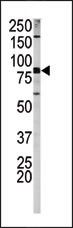 | The anti-Phospho-APP-S730 Pab (Cat# 102-15267) is used in Western blot to detect Phospho-APP-S730 in Jurkat tissue lysate. |
Antigen Source
HUMAN
Storage/Stability
2-8°C (short-term); -20°C (long-term)
Expiration:
12 months from the date of shipment when stored properly.