Introduction
This gene encodes a member of the peroxisome proliferator-activated receptor (PPAR) family. PPARs are nuclear hormone receptors that bind peroxisome proliferators and control the size and number of peroxisomes produced by cells. PPARs mediate a variety of biological processes, and may be involved in the development of several chronic diseases, including diabetes, obesity, atherosclerosis, and cancer. This protein is a potent inhibitor of ligand-induced transcription activity of PPAR alpha and PPAR gamma. It may function as an integrator of transcription repression and nuclear receptor signaling. The expression of this gene is found to be elevated in colorectal cancer cells. The elevated expression can be repressed by adenomatosis polyposis coli (APC), a tumor suppressor protein related to APC/beta-catenin signaling pathway. Knockout studies in mice suggested the role of this protein in myelination of the corpus callosum, lipid metabolism, and epidermal cell proliferation. Alternate splicing results in multiple transcript variants.
Specificity
Other Names
PPARD; NR1C2; PPARB; Peroxisome proliferator-activated receptor delta; NUCI; Nuclear hormone receptor 1; Nuclear receptor subfamily 1 group C member 2; Peroxisome proliferator-activated receptor beta
NCBI Accession #
NP_001165289.1;NP_001165290.1;NP_001165291.1;NP_006229.1;NP_803184.1
Other Accession #
NP_001165289.1; NP_001165290.1; NP_001165291.1; NP_803184.1
Format
Type
Peptide Affinity Purified Rabbit Polyclonal Antibody (Pab)
Calculated Molecular Weight (Da)
49903
Recommended Dilutions
WB: 1:1000
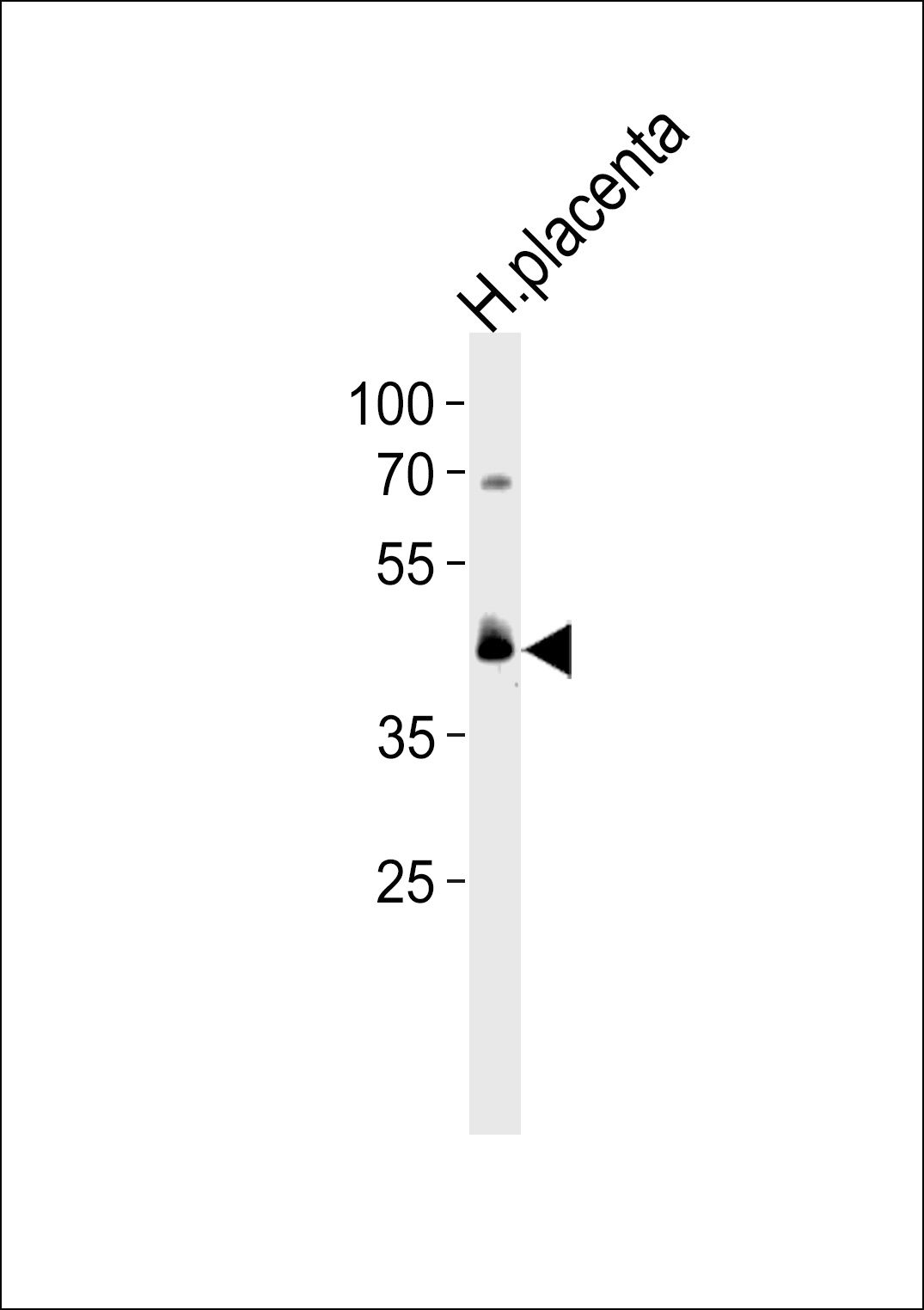 | PPARD Antibody (C-term) (Cat# 102-12158) western blot analysis in human placenta tissue lysates (35ug/lane).This demonstrates the PPARD antibody detected the PPARD protein (arrow). |
Antigen Source
HUMAN
Storage/Stability
2-8°C (short-term); -20°C (long-term)
Expiration:
12 months from the date of shipment when stored properly.