Introduction
ROR2 is a tyrosine-protein kinase receptor which may be involved in the early formation of the chondrocytes. It seems to be required for cartilage and growth plate development. This Type I membrane protein is expressed at high levels during early embryonic development. The expression levels drop strongly around day 16 and there are only very low levels in adult tissues. Defects in ROR2 are a cause of brachydactyly type B1 (BDB1). BDB1 is an autosomal dominant skeletal disorder characterized by hypoplasia/aplasia of distal phalanges and nails. In BDB1 the middle phalanges are short but in addition the terminal phalanges are rudimentary or absent. Both fingers and toes are affected. The thumbs and big toes are usually deformed. Defects in ROR2 are a cause of recessive Robinow syndrome (RRS). RRS is an autosomal disorder characterized by skeletal dysplasia with generalized limb bone shortening, segmental defects of the spine, brachydactyly and a dysmorphic facial appearance. The protein contains 1 frizzled (FZ) domain, 1 immunoglobulin-like C2-type domain, and 1 kringle domain.
Specificity
Other Names
ROR2; NTRKR2; Tyrosine-protein kinase transmembrane receptor ROR2; Neurotrophic tyrosine kinase, receptor-related 2
NCBI Accession #
NP_004551.2
Other Accession #
NP_004551
Format
Type
Purified Rabbit Polyclonal Antibody (Pab)
Calculated Molecular Weight (Da)
104757
Recommended Dilutions
WB: 1:1000; IHC: 1:10-50
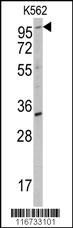 | Western blot analysis of anti-ROR2 Antibody (Cat# 102-17546) in K562 cell line lysates (35ug/lane). ROR2(arrow) was detected using the purified Pab. |
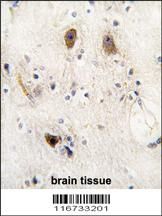 | Formalin-fixed and paraffin-embedded human brain tissue reacted with ROR2 antibody, which was peroxidase-conjugated to the secondary antibody, followed by DAB staining. This data demonstrates the use of this antibody for immunohistochemistry; clinical relevance has not been evaluated. |
Antigen Source
HUMAN
Storage/Stability
2-8°C (short-term); -20°C (long-term)
Expiration:
12 months from the date of shipment when stored properly.