Introduction
Temporally regulated transcription and translation of several testis-specific genes is required to initiate the series of molecular and morphological changes in the male germ cell lineage necessary for the formation of mature spermatozoa. This gene is a member of the SPANX family of cancer/testis-associated genes, which are located in a cluster on chromosome X. The SPANX genes encode differentially expressed testis-specific proteins that localize to various subcellular compartments. This particular gene maps to chromosome X in a head-to-tail orientation with SPANX family member B1 and appears to be a duplication of that locus. The SPANXB genes are unique members of this gene family, since they contain an additional 18 nt in their coding region compared to the majority of family members. Although the protein encoded by this gene contains consensus nuclear localization signals, the major site for subcellular localization of expressed protein is in the cytoplasmic droplets of ejaculated spermatozoa. This protein provides a biochemical marker for studying the unique structures in spermatazoa, while attempting to further define its role in spermatogenesis.
Specificity
Other Names
SPANXB1; SPANXB; Sperm protein associated with the nucleus on the X chromosome B/F; Cancer/testis antigen 11.2; Nuclear-associated protein SPAN-Xb; Nuclear-associated protein SPAN-Xf; SPANX family member B/F
NCBI Accession #
NP_115850.1;NP_620588.1;NP_663697.1
Other Accession #
Q9NY87; Q9NS26; NP_663697.1
Format
Type
Peptide Affinity Purified Rabbit Polyclonal Antibody (Pab)
Calculated Molecular Weight (Da)
11826
Recommended Dilutions
WB: 1:1000
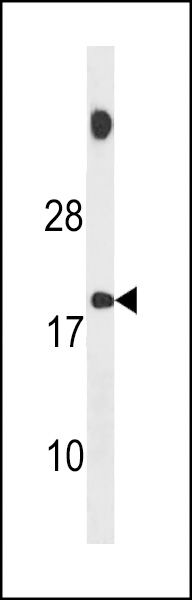 | SPNXB Antibody (Center) (Cat# 102-14609) western blot analysis in MDA-MB231 cell line lysates (35ug/lane).This demonstrates the SPNXB antibody detected the SPNXB protein (arrow). |
Antigen Source
HUMAN
Storage/Stability
2-8°C (short-term); -20°C (long-term)
Expiration:
12 months from the date of shipment when stored properly.