Skip to navigationSkip to contentSkip to footer
Need Help?770-729-2992
MY ACCOUNT
CART
RayBiotech
RayBiotech
  • Products
    • Multiplex Assays
    • ELISA Kits
    • Proteins
    • Antibodies
    • Flow Cytometry
    • Assay Kits
    • Molecular Biology
    • Other Products
    • Human Cytokine Array C5
    • Human IL-6 ELISA
    • Human Inflammation Array Q3
    • Mouse Cytokine Array C3
    • Recombinant SARS-CoV-2 Spike Protein, S1 Subunit
    • Human Phosphorylation Pathway Profiling Array C55
    • Antibody Arrays
    • Proteome Profiling Arrays
    • Cytometric Bead Arrays
    • Epitope Mapping Peptide Arrays
    • Protein Arrays
    • PTM Multiplex Assays
    • NexaTag® Ultrasensitive Multiplex ELISA
    • Sandwich ELISA
    • Competitive ELISA
    • PTM ELISA
    • NexaTag® Ultrasensitive qIPCR ELISA
    • Indirect ELISA
    • Bridging ELISA
    • Cell-Based ELISA
    • Recombinant Proteins
    • GMP Proteins
    • Native Proteins
    • Peptides
    • Primary Antibodies
    • Secondary Antibodies
    • Flow Cytometry Antibodies
    • Isotype Controls
    • Antibody Pairs
    • Flow Cytometry Antibodies
    • Flow Cytometry Reagents
    • Flow Cytometry Assays
    • Cytometric Bead Arrays
    • Fluorescent Beads
    • Quantum Dots
    • Metabolism Assays
    • Ligand Binding Assays
    • Drug Antibody (DA) & ADA Assays
    • Transcription Factor Activity Assays
    • PCR Assays
    • Nucleic Acid Assays
    • Epigenetics
    • Mitochondrial Assays
    • Reagents
    • Cell Culture
    • Biospecimen Samples
    • Sample Collection & Preparation
    • Lysates
    • Magnetic Beads
    • Lab Equipment and Supplies
    • Biological Buffers

    Featured Products

    Human Cytokine Array C5Human IL-6 ELISAHuman Inflammation Array Q3Mouse Cytokine Array C3Recombinant SARS-CoV-2 Spike Protein, S1 SubunitHuman Phosphorylation Pathway Profiling Array C55
  • Services
    • Multiplex Assay Services
    • ELISA Services
    • Protein Services
    • Antibody Services
    • CRO Services
    • Flow Cytometry Services
    • SIMOA – Single Molecule Array
    • Other Services
    • Quantitative Proteomics Services
    • Discovery Proteomics Services
    • Custom Arrays
    • Array Scanning and Analysis
    • Custom Protein Production
    • GMP Protein Production
    • IHC Controls
    • Stable Cell Line Development
    • Molecular Biology Services
    • Antibody Production
    • Recombinant Antibody Expression
    • Bulk Antibody Production
    • Antibody Conjugation Services
    • Cell Biology Services
    • Epitope Mapping Services
    • Biomarker Discovery
    • Cell Biology Services
    • Antibody Drug Development & Characterization
    • Pharmacokinetic and Pharmacodynamic Analysis
    • Assay Development Services
    • Molecular Biology Services
    • Multiomics Services
    • Diagnostic Assay Development
    • GMP Protein Production
    • Biostatistics and Bioinformatics
    • Bulk Antibody Production
    • QC Testing Services
    • Auto-Western Blot Service
    • COVID-19 Pseudovirus Service
    • Biospecimen Samples & Sample Services
    • RNA & DNA Methylation Detection Services
  • Research Areas
    • Cell Signaling Pathways
    • Areas of Interest
    • Akt Signaling Pathway
    • AMPK Signaling pathway
    • ErbB Signaling Pathway
    • Hedgehog Signaling Pathway
    • HIF1-alpha Signaling Pathway
    • IGFR1 Signaling Pathway
    • JAK-STAT Signaling Pathway
    • MAPK Signaling Pathway
    • mTOR Signaling Pathway
    • NF-kappaB Signaling Pathway
    • Notch Signaling Pathway
    • p53 Signaling Pathway
    • PKC Pathway
    • TGF-beta Signaling Pathway
    • Wnt/beta-Catenin Pathway
    • Antibody Drug Development
    • Autoimmunity & Inflammation
    • Cancer
    • Cardiovascular Disease
    • Infectious Disease & Vaccines
    • Neuroscience
    • Obesity
    • Post Translational Modifications
    • RNA & DNA Modifications
  • Resources
    • Array Picker Tool
    • Sample Shipment Instructions
    • Sample Preparation Tips
    • Publications / Citations
    • Promotions
    • Resource Library
    • Learning Center
    • Manual Protocols
    • Array Analysis Tools
  • Contact Us
    • Distributors & Service Providers
  • About Us
    • Quality Systems
    • Business Partnerships
    • Careers
    • News & Events
Products
  • Multiplex Assays
  • ELISA Kits
  • Proteins and Peptides
  • Antibodies
  • Flow Cytometry
  • Assay Kits
  • Molecular Biology

Sign up to get promotions on your favorite research tools and research updates.

Sign up to Newsletter (opens in new tab)
Services
  • Multiplex Assay Services
  • ELISA Services
  • Antibody Services
  • Custom Protein Services
  • CRO Services
  • Flow Cytometry Services
  • Simoa – Single Molecule Array Services
Resources
  • Manual Protocols
  • Resource Library
  • Learning Center
  • Array Analysis Tools
  • Publications / Citations
  • Publications by RayBiotech Scientists
About Us
  • About RayBiotech
  • Careers
  • Quality Systems
  • Business Partnerships
  • News & Events
  • Reducing Our Emissions
Contact Us
  • Contacts
  • Distributors
  • Certified Service Providers
ISO 13485:2016cGMP
ISO 17025:2017CLIA
©2007-2026 RayBiotech, Inc. All rights reserved.Life Science Web Design By Supreme
  • Privacy Policy
  • Terms & Conditions
  • ISO Certification
  • Risk Free Guarantee
  • Promotions

Your cart is empty.

  • Home
  • Learning Center
  • CRO
  • Subcutaneous Biologic Development: Strategy, Challenges, and Immunogenicity Considerations
February 24, 2026|CRO|Diana Bechtel, PhD

Subcutaneous Biologic Development: Strategy, Challenges, and Immunogenicity Considerations

Subcutaneous Biologic Development: Strategy, Challenges, and Immunogenicity Considerations

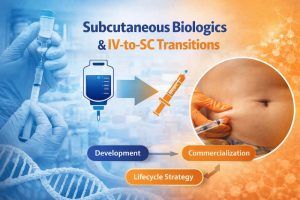
Subcutaneous (SC) biologic delivery has become a central focus across the biopharmaceutical industry. Driven by patient convenience, reduced healthcare burden, and competitive differentiation, many biologics are now developed with SC administration in mind or transitioned from intravenous (IV) to SC later in their lifecycle.

For both originator and biosimilar programs, SC development is no longer a formulation-only decision. Instead, it requires close alignment across strategy, CMC, clinical, and regulatory teams, particularly when evaluating immunogenicity, comparability, and long-term lifecycle impact.
Why IV-to-SC transitions continue to accelerate

The growing shift toward SC biologics is supported by several converging trends. From a patient perspective, SC administration enables home dosing and reduces reliance on infusion centers. For healthcare systems, it can lower administration costs and ease clinic burden. From a development and lifecycle standpoint, SC formulations are increasingly used to extend product relevance, support differentiation, and respond to intensifying biosimilar competition.

While these benefits make SC development appealing, they also introduce additional technical and regulatory considerations that must be carefully addressed.

Formulation and delivery challenges unique to SC biologics

SC delivery imposes constraints that differ significantly from IV administration. Higher drug concentrations are often required to achieve therapeutic exposure within limited injection volumes, which can increase viscosity and injection force and place additional demands on delivery devices.

These formulation and delivery challenges do more than affect usability and patient experience. They can also influence drug exposure, dosing frequency, and the way the immune system encounters the biologic—making immunogenicity an important consideration early in SC development planning.

Leave a Reply

Immunogenicity considerations in subcutaneous delivery

Changes in route of administration can alter immune responses through multiple mechanisms, including differences in absorption kinetics, increased interaction with immune cells at the injection site, and shifts in dosing frequency or concentration. As a result, immunogenicity assessment is a core component of SC biologic development, especially when transitioning from IV to SC.

Anti-drug antibody (ADA) and drug antibody (DA) data are often used to evaluate whether SC delivery introduces clinically meaningful differences in immune response, drug exposure, or pharmacokinetics compared with the original route of administration.

Additional complexity in biosimilar SC development

For biosimilars, SC development adds an additional layer of complexity. In addition to demonstrating similarity to the reference product, biosimilar developers must assess whether changes in formulation or route of administration affect immunogenicity profiles, drug exposure, or overall clinical comparability.

Bridging and comparability studies supported by robust bioanalytical data are commonly used to address these questions and to support regulatory confidence in biosimilarity across routes of administration.

Supporting SC biologic development with bioanalytical data

Reliable bioanalytical data underpins successful SC development. Immunogenicity and drug-level data are essential for interpreting changes in exposure, assessing comparability between IV and SC formulations, and supporting regulatory submissions and lifecycle expansion.

Assays that are reproducible, fit for purpose, and compatible with both CRO and in-house workflows help ensure data consistency and confidence across studies.

Aligning regulatory expectations with lifecycle strategy in SC development

Regulatory agencies expect sponsors to evaluate changes in route of administration as part of an overall, risk-based development strategy. This typically includes clear justification of formulation and delivery changes, assessment of immunogenicity risk, and use of appropriate bioanalytical methods to support comparability. Addressing these expectations early helps reduce regulatory uncertainty and avoid delays later in development.

Subcutaneous development is most effective when these regulatory considerations are integrated into a broader lifecycle strategy rather than treated as standalone requirements. Decisions around when to introduce SC delivery, how it supports long-term differentiation, and how it interacts with biosimilar competition all influence the level of evidence regulators may expect.

By aligning regulatory planning with lifecycle objectives from the outset, teams can ensure that technical, clinical, and bioanalytical decisions remain consistent with both development timelines and long-term strategic goals. This integrated approach supports smoother regulatory interactions while enabling SC delivery to contribute meaningfully to product value across the lifecycle.

Conclusion

Subcutaneous biologic development offers clear advantages, but it also introduces new scientific and strategic considerations. From formulation and delivery challenges to immunogenicity and comparability assessment, SC development requires coordinated planning across disciplines.

By aligning strategy, CMC, clinical, and bioanalytical approaches, biopharma teams can unlock the full potential of SC delivery while managing risk throughout the product lifecycle.

Learn more about how ADA/DA assay kits, bioanalytical services, and custom assay development can help generate reliable data to inform immunogenicity, comparability, and lifecycle decisions.

ADA and DA Assays
Antibody Drug Development & Characterization Services

Subcutaneous Biologic Development – Frequently Asked Questions (FAQ)

Frequently Asked Questions

◎What is subcutaneous (SC) biologic administration?

Subcutaneous administration delivers a biologic into the tissue beneath the skin rather than into a vein (IV). SC delivery is often used to enable more convenient dosing, including home administration and self-injection, depending on the therapy and device.

◎Why do companies transition biologics from intravenous (IV) to subcutaneous (SC)?

IV-to-SC transitions are commonly pursued to improve patient convenience, reduce infusion center burden, support home dosing, and strengthen lifecycle differentiation. In competitive markets, SC formulations can also support product positioning and long-term commercial strategy.

◎What are the main challenges in subcutaneous biologic development?

Key SC development challenges often include limited injection volume, high drug concentration requirements, increased viscosity, device compatibility (auto-injector/on-body), and maintaining stability and quality at higher concentrations.

◎How can SC formulation changes affect immunogenicity?

Changes in route of administration, concentration, excipients, or dosing frequency can influence exposure and immune responses. SC dosing may increase local immune exposure at the injection site, making immunogenicity assessment an important part of SC development and IV-to-SC transitions.

◎What is comparability in IV-to-SC transitions?

Comparability refers to demonstrating that the SC formulation and delivery method does not introduce clinically meaningful differences compared with the IV product, including differences in exposure, efficacy, safety, or immunogenicity. Comparability can be supported by analytical, nonclinical, and clinical evidence depending on the program.

◎What studies are typically used to support IV-to-SC development?

Study designs vary by product, but programs often rely on a combination of:

  • Analytical comparability and stability characterization
  • PK and exposure–response analysis
  • Immunogenicity assessment (e.g., ADA and drug level monitoring)
  • Bridging studies between IV and SC routes when appropriate
◎Why is immunogenicity data important for SC lifecycle strategy?

Immunogenicity can affect both clinical outcomes and regulatory confidence in a route of administration change. ADA incidence or impact on drug exposure may influence timelines, labeling, differentiation, and post-approval lifecycle planning—particularly in crowded therapeutic areas.

◎How does SC development impact biosimilar competition?

SC development can be a differentiation lever in biosimilar-heavy markets. Originators may pursue SC formulations to improve convenience and defend share, while biosimilar developers may evaluate SC options to remain competitive. In both cases, comparability and immunogenicity assessment are central.

◎How can RayBiotech support subcutaneous biologic development?

RayBiotech supports SC development by providing ADA and DA assay kits, as well as bioanalytical services and custom assay development, enabling teams to generate reliable immunogenicity and exposure data to support IV-to-SC transitions and lifecycle strategy.