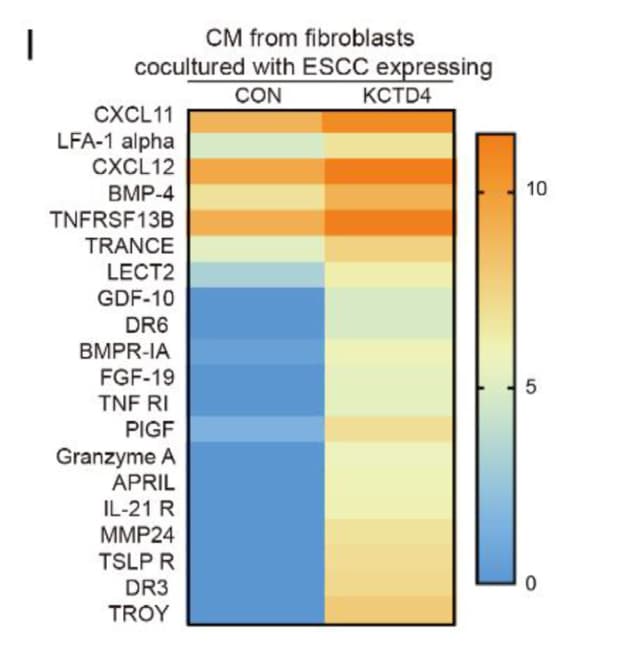
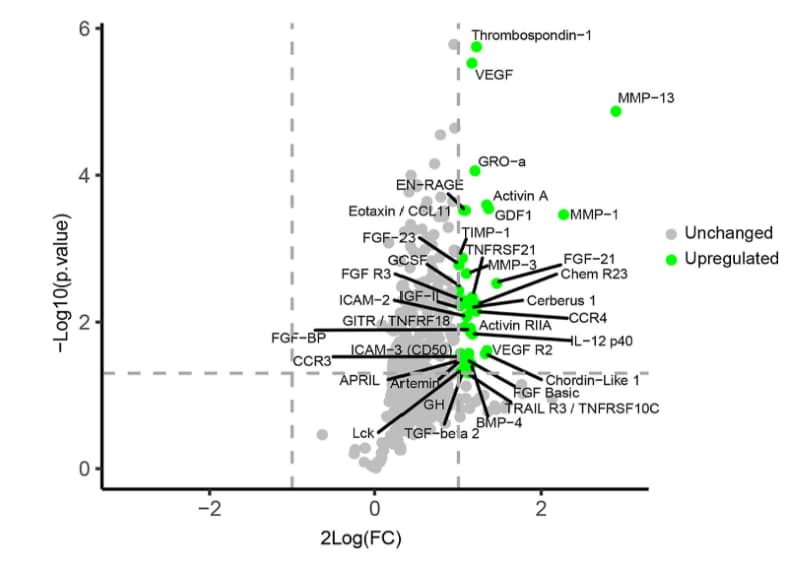
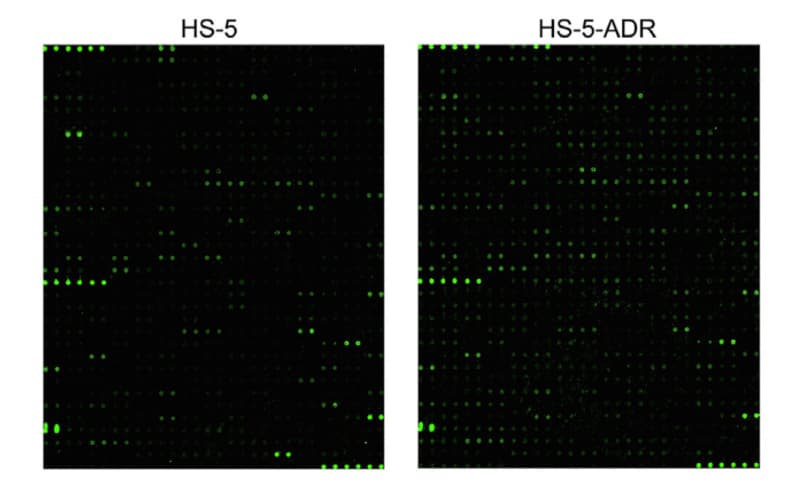
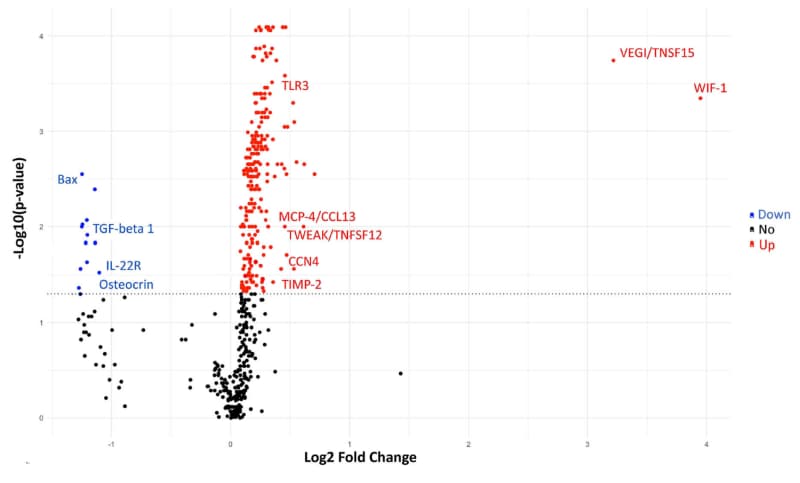
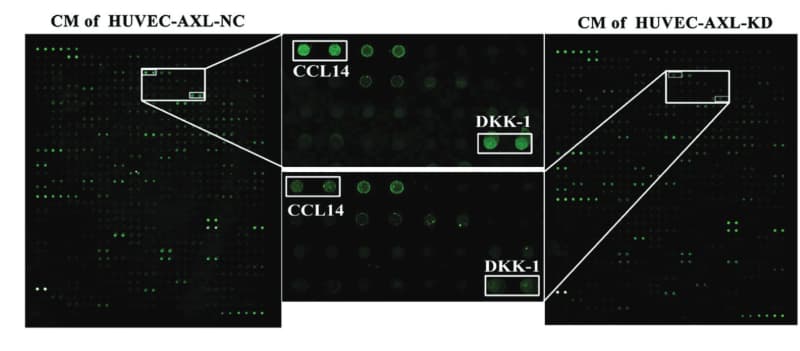
507 human target proteins. Scroll to see the full list.
6Ckine, Activin A, Activin B, Activin C, Activin RIA (ALK-2), Activin RIB (ALK-4), EYA2, Activin RIIA, Adiponectin (Acrp30), AgRP, ALCAM, Angiogenin, Angiopoietin-1, Angiopoietin-2, Angiopoietin-4, Angiopoietin-like 1, Angiopoietin-like 2, Angiopoietin-like Factor, Angiostatin, APJ, APRIL, AR (Amphiregulin), Artemin, Axl, B7-1 (CD80), BAFF R (TNFRSF13C), BCMA (TNFRSF17), BD-1, BDNF, beta-Catenin, BAX, beta-NGF, BIK, BLC (BCA-1/CXCL13), BMP-2, BMP-3, BMP-3b (GDF-10), BMP-4, BMP-5, BMP-6, BMP-7, BMP-8, BMP-15, BMPR-IA (ALK-3), BMPR-IB (ALK-6), BMPR-II, BTC, Cardiotrophin-1 (CT-1), CCL14 (HCC-1/HCC-3), CCL28 (VIC), CCR1, CCR2, CCR3, CCR4, CCR5, CCR6, CCR7, CCR8, CCR9, CD14, CD27 (TNFRSF7), CD30 (TNFRSF8), CD30 Ligand (TNFSF8), CD40 (TNFRSF5), CD40 Ligand (TNFSF5/CD154), CD 163, Cerberus 1, Chem R23, Chordin-Like 1, Chordin-Like 2, CLC, CNTF, CNTF R alpha, Coagulation Factor III (Tissue Factor), CRIM 1, Cripto-1, CRTH-2, Cryptic, Csk, CTACK (CCL27), CTGF (CCN2), CTLA-4 (CD152), CV-2 (Crossveinless-2), CXCL14 (BRAK), CXCL16, CXCR1 (IL-8 RA), CXCR2 (IL-8 RB), CXCR3, CXCR4 (fusin), CXCR5 (BLR-1), CXCR6, D6, DAN, DANCE, DcR3 (TNFRSF6B), Decorin, Dkk-1, Dkk-3, Dkk-4, DR3 (TNFRSF25), DR6 (TNFRSF21), Dtk, EDA-A2, EDAR, EDG-1, EGF, EGF R (ErbB1), EG-VEGF (PK1), EMAP-II, ENA-78, Endocan, Endoglin (CD105), Endostatin, Endothelin, EN-RAGE, Eotaxin (CCL11), Eotaxin-2 (MPIF-2), Eotaxin-3 (CCL26), Epiregulin, ErbB2, ErbB3, ErbB4, Erythropoietin, E-Selectin, FADD, FAM3B, Fas (TNFRSF6), Fas Ligand, FGF Basic, FGF-BP, FGF R3, FGF R4, FGF R5, FGF-4, FGF-5, FGF-6, FGF-7 (KGF), FGF-8, FGF-9, FGF-10 (KGF-2), FGF-11, FGF-12, FGF-13 1B, FGF-16, FGF-17, FGF-18, FGF-19, FGF-20, FGF-21, FGF-23, FLRG, Flt-3 Ligand, Follistatin, Follistatin-like 1, Fractalkine, Frizzled-1, Frizzled-3, Frizzled-4, Frizzled-5, Frizzled-6, Frizzled-7, Galectin-3, GASP-1 (WFIKKNRP), GASP-2 (WFIKKN), GCP-2 (CXCL6), GCSF, G-CSF R (CD 114), GDF1, GDF3, GDF5, GDF8, GDF9, GDF11, GDF-15, GDNF, GFR alpha-1, GFR alpha-2, GFR alpha-3, GFR alpha-4, GITR (TNFRF18), GITR Ligand (TNFSF18), Carbonyl reductase (CBR1), Glut1, Glut2, Glut3, Glut5, Glypican 3, Glypican 5, GM-CSF, GM-CSF R alpha, Granzyme A, GREMLIN, GRO, GRO-a, Growth Hormone (GH), Growth Hormone R (GHR), HB-EGF, HCC-4 (CCL16), HCR (CRAM-A/B), Hepassocin, GLO-1, HGF, HGFR, HRG-alpha, HRG-beta 1, HVEM (TNFRSF14), I-309, ICAM-1, ICAM-2, ICAM-3 (CD50), ICAM-5, IFN-alpha/beta R1, IFN-alpha/beta R2, IFN-beta, IFN-gamma, IFN-gamma R1, IGFBP-1, IGFBP-2, IGFBP-3, IGFBP-4, IGFBP-6, IGFBP-rp1 (IGFBP-7), IGF-I, IGF-I R, IGF-II, IGF-II R, IL-1 alpha, IL-1 beta, IL-1 F5 (FIL1delta), IL-1 F6 (FIL1 epsilon), IL-1 F7 (FIL1 zeta), IL-1 F8 (FIL1 eta), IL-1 F9 (IL-1 H1), IL-1 F10 (IL-1HY2), IL-1 R3 (IL-1 R AcP), IL-1 R4 (ST2), IL-1 R6 (IL-1 Rrp2), IL-1 R8, IL-1 R9, IL-1 ra, IL-1 sRI, IL-1 sRII, IL-2, IL-2 R alpha, IL-2 R beta (CD122), IL-2 R gamma, IL-3, IL-3 R alpha, IL-4, IL-4 R, IL-5, IL-5 R alpha, IL-6, IL-6 R, IL-7, IL-7 R alpha, IL-8, IL-9, IL-10, IL-10 R alpha, IL-10 R beta, IL-11, IL-12 p40, IL-12 p70, IL-12 R beta 1, IL-12 R beta 2, IL-13, IL-13 R alpha 1, IL-13 R alpha 2, IL-15, IL-15 R alpha, IL-16, IL-17, IL-17B, IL-17B R, IL-17C, IL-17D, IL-17E, IL-17F, IL-17R, IL-17RC, IL-17RD, IL-18 BPa, IL-18 R alpha (IL-1 R5), IL-18 R beta (AcPL), IL-19, IL-20, IL-20 R alpha, IL-20 R beta, IL-21, IL-21 R, IL-22, IL-22 BP, IL-22 R, IL-23, IL-23 R, IL-24, IL-26, IL-27, IL-28A, IL-29, IL-31, IL-31 RA, BACE-1, FACX, Insulin, Insulin R, Insulysin (IDE), IP-10, I-TAC (CXCL11), Kininostatin (kininogen), Kremen-1, Kremen-2, Latent TGF-beta bp1, LBP, Lck, LECT2, Lefty - A, Leptin (OB), Leptin R, LFA-1 alpha, LIF, LIF R alpha, LIGHT (TNFSF14), Lipocalin-1, Lipocalin-2, LRP-1, LRP-6, L-Selectin (CD62L), Lymphotactin (XCL1), Lymphotoxin beta (TNFSF3), Lymphotoxin beta R (TNFRSF3), MAC-1, MCP-1, MCP-2, MCP-3, MCP-4 (CCL13), M-CSF, M-CSF R, MDC, MFG-E8, MFRP, MICA, MIF, MIG, MIP-1a, MIP-1b, MIP-1d, MIP 2, MIP-3 alpha, MIP-3 beta, MMP-1, MMP-2, MMP-3, MMP-7, MMP-8, MMP-9, MMP-10, MMP-11 (Stromelysin-3), MMP-12, MMP-13, MMP-14, MMP-15, MMP-16 (MT3-MMP), MMP-19, MMP-20, MMP-24 (MT5-MMP), MMP-25 (MT6-MMP), MSP alpha Chain, Musk, NAP-2, NCAM-1 (CD56), Neuritin, NeuroD1, Neuropilin-2, Neurturin, NGF R, Nidogen-1, NOV (CCN3), NrCAM, NRG1 Isoform GGF2, NRG2, NRG3, NT-3, NT-4, Orexin A, Orexin B, OSM, Osteoactivin (GPNMB), Osteocrin, Osteoprotegerin (TNFRSF11B), OX40 Ligand (TNFSF4), PARC (CCL18), PD-ECGF, PDGF R alpha, PDGF R beta, PDGF-AA, PDGF-AB, PDGF-BB, PDGF-C, PDGF-D, PECAM-1 (CD31), Pentraxin3 (TSG-14), Persephin, PF4 (CXCL4), PlGF, PLUNC, Pref-1, Progranulin, Prolactin, P-selectin, RAGE, RANK (TNFRSF11A), RANTES, RELM beta, RELT (TNFRSF19L), ROBO4, S100 A8/A9, S100A10, SAA, SCF, SCF R (CD117), SDF-1 (CXCL12), sFRP-1, sFRP-3, sFRP-4, sgp130, SIGIRR, Siglec-5 (CD170), Siglec-9, SLPI, Smad 1, Smad 4, Smad 5, Smad 7, Smad 8, Prdx6, Soggy-1, Sonic Hedgehog (Shh N-terminal), SPARC, Spinesin, TACI (TNFRSF13B), Tarc, TCCR (WSX-1), TECK (CCL25), TFPI, TGF-alpha, TGF-beta 1, TGF-beta 2, TGF-beta 3, ATP2B1, TGF-beta RI (ALK-5), TGF-beta RII, Grb2, TGF-beta RIII, Thrombopoietin (THPO), Thyroid Peroxidase (TPO), Thrombospondin-1, Thrombospondin-2, Thrombospondin-4, Thymopoietin, Tie-1, Tie-2, TIMP-1, TIMP-2, TIMP-3, TIMP-4, Defensin-5 (DEFA5), TLR1, TLR2, TLR3, TLR4, TMEFF1 (Tomoregulin-1), TMEFF2, TNF-alpha, TNF-beta, TNF RI (TNFRSF1A), TNF RII (TNFRSF1B), TRADD, TRAIL (TNFSF10), TRAIL R1 (DR4/TNFRSF10A), TRAIL R2 (DR5/TNFRSF10B), TRAIL R3 (TNFRSF10C), TRAIL R4 (TNFRSF10D), TRANCE, TREM-1, TROY (TNFRSF19), TSG-6, TSLP R, TWEAK (TNFSF12), TWEAK R (TNFRSF12), Ubiquitin+1, uPA, uPAR, Vasorin, VCAM-1 (CD106), VE-Cadherin, VEGF, VEGF R2 (KDR), VEGF R3, VEGF-B, VEGF-C, VEGF-D, VEGI (TNFSF15), WIF-1, WISP-1 (CCN4), XEDAR
For best results, store the entire kit frozen at -20°C upon arrival. Stored frozen, the kit will be stable for at least 6 months which is the duration of the product warranty period. Once thawed, store array slide(s) at -20°C and all other reagents undiluted at 4°C for no more than 3 months.