RayBio® Mouse SIRPA ELISA Kit for Serum, Plasma, and Cell Culture Supernatants.
Lead time: Typically ships within 1-2 business days. No Friday shipments.
RayBio® Mouse SIRPA ELISA Kit for Serum, Plasma, and Cell Culture Supernatants.
Lead time: Typically ships within 1-2 business days. No Friday shipments.
| Size | 1 Plate Kit, 2 Plate Kit, 5 Plate Kit |
| Estimated Lead Time | 1-2 business days |
| Species | Mouse |
| Sensitivity | 5.6 pg/ml Need more sensitivity? Check out the new NexaTag® kit for this target. Still not enough? Then your answer is our Ultrasensitive Biomarker Testing Service powered by Simoa™ technology. |
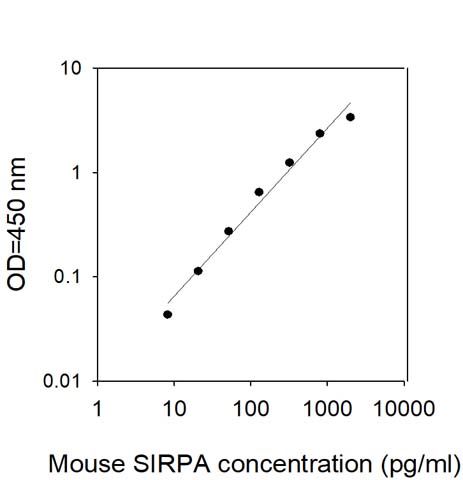
| Detection Range | 5.6 pg/ml - 2000 pg/ml |
| Specificity | This ELISA antibody pair detects mouse SIRPA. Other species not determined. |
| Compatible Sample Types | Cell Culture Supernatants, Plasma, Serum |
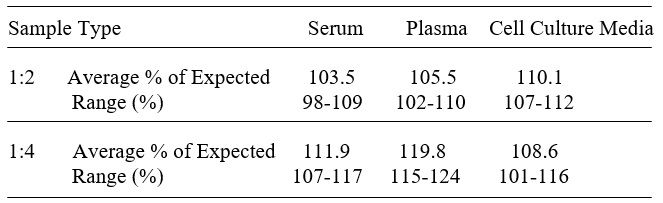
| Recommended Dilution (Serum/Plasma) | 4 fold |
| Accession Number | P97797 |
| Gene Symbols | BIT, MYD1, PTPNS1, SHPS1, SIRP, SIRPA |
| Protein Name / Synonyms | Tyrosine-protein phosphatase non-receptor type substrate 1 (SHP substrate 1) (SHPS-1) (Brain Ig-like molecule with tyrosine-based activation motifs) (Bit) (CD172 antigen-like family member A) (Inhibitory receptor SHPS-1) (MyD-1 antigen) (Signal-regulatory protein alpha-1) (Sirp-alpha-1) (mSIRP-alpha1) (p84) (CD antigen CD172a) |
| Quantitative/Semi-Quantitative | Quantitative |
| Solid Support | 96-well Microplate |
| Design Principle | Sandwich-based |
| Method Of Detection | Colorimetric |
| Research Area | Cancer, Inflammation |
| Shipping Type | Blue ice |
| Storage | -20°C |
We manufacture our ELISAs in-house, so we can build a custom version for your study.
Feasibility varies by target and modification, and we’ll tell you upfront what’s achievable.
Your cart is empty.
RayBio® Mouse SIRPA ELISA Kit for Serum, Plasma, and Cell Culture Supernatants.
Lead time: Typically ships within 1-2 business days. No Friday shipments.
Mouse SIRPA ELISA Kit
Mouse SIRPA ELISA Kit
The ELISA worked well for mouse plasma diluted 1:10. Samples were from experimental mice in an advanced liver injury model.
Review by Joe, from University of Louisville, on Feb 27, 2025
Sign up to get promotions on your favorite research tools and research updates.
